
Finishing your BBA feels like crossing a finish line. Then, almost immediately, a new question shows up: “Okay, but what now?”
If you’ve been Googling “career after BBA” at 1 AM, wondering whether you should do an MBA, take a job, prep for government exams, or just start something of your own — you’re in the right place.
The truth is, there’s no single “correct” path after BBA. There are several good ones, and the right one depends entirely on you. This guide walks through all the realistic options, what they actually involve, and how to figure out which one fits your goals.
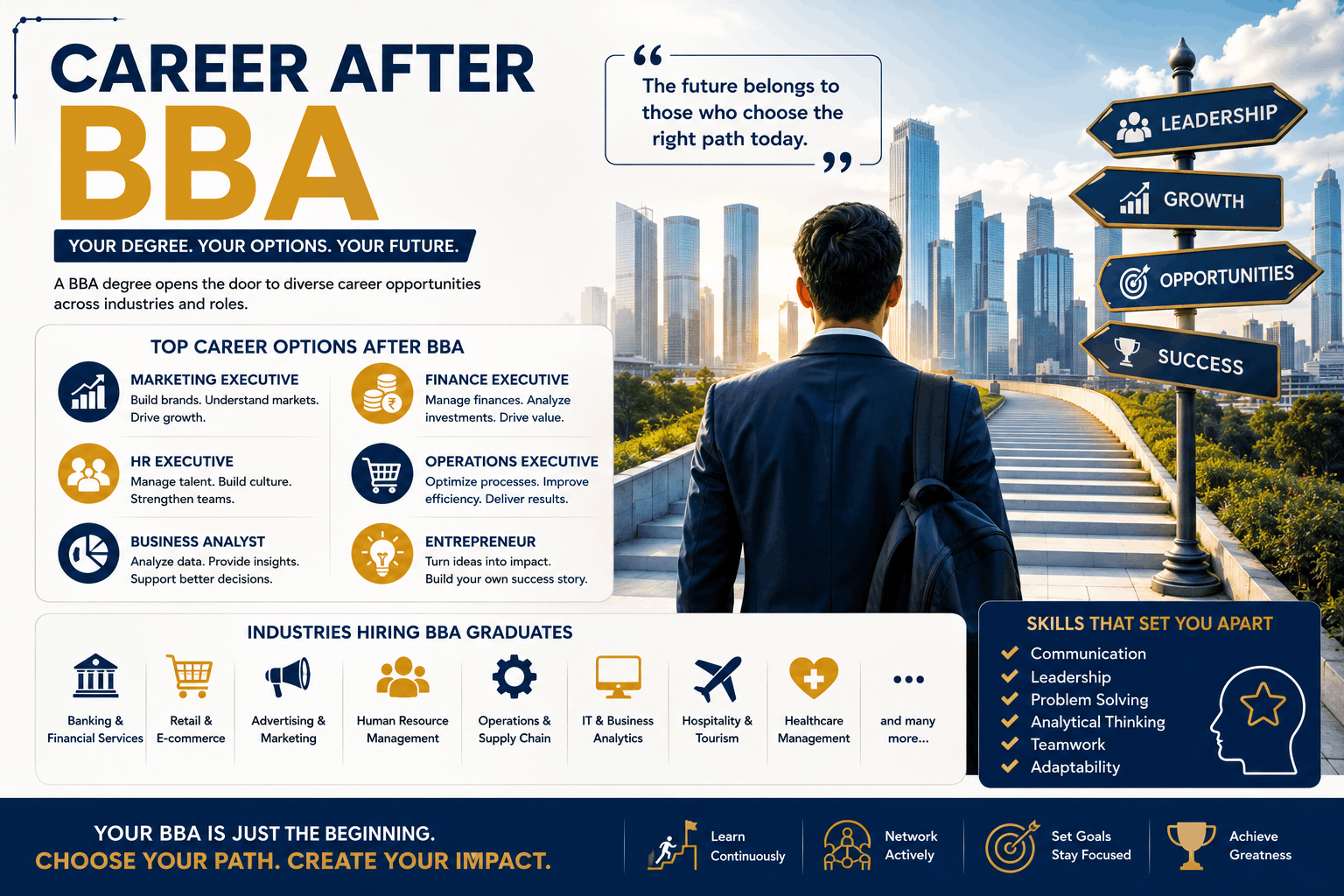
Let’s break it down step by step.
Why a BBA Degree Gives You More Options Than You Think
A Bachelor of Business Administration isn’t a narrow, one-track degree. During those three years, you’ve touched on finance, marketing, HR, operations, business law, and strategy.
That breadth is actually your biggest advantage right now. Instead of being boxed into one job title, you’ve got a working knowledge of how businesses function as a whole. That means you can pivot toward whichever area genuinely interests you, rather than being stuck with limited choices.
So before you panic about “picking the wrong path,” remember this: a BBA is designed to give you options, not restrict them.
Option 1: Go Straight Into a Job
For a lot of graduates, the most practical next step is simply getting hired. There’s nothing wrong with wanting to start earning and gaining real-world experience right away.
Some common entry points include:
- Sales and Business Development – building client relationships and driving revenue
- Marketing Associate – assisting with campaigns, content, and brand strategy
- HR Coordinator – supporting recruitment and employee engagement
- Operations Executive – handling logistics, process management, and daily workflows
- Junior Financial Analyst – assisting with budgets, reports, and financial planning
These roles won’t necessarily be glamorous on day one, but they teach you things no classroom can — how to manage deadlines, work with teams, and handle real business problems.
A lot of people treat their first job after BBA as a trial period. It’s a chance to figure out what you actually enjoy doing, rather than guessing from a textbook description.
Option 2: Pursue an MBA
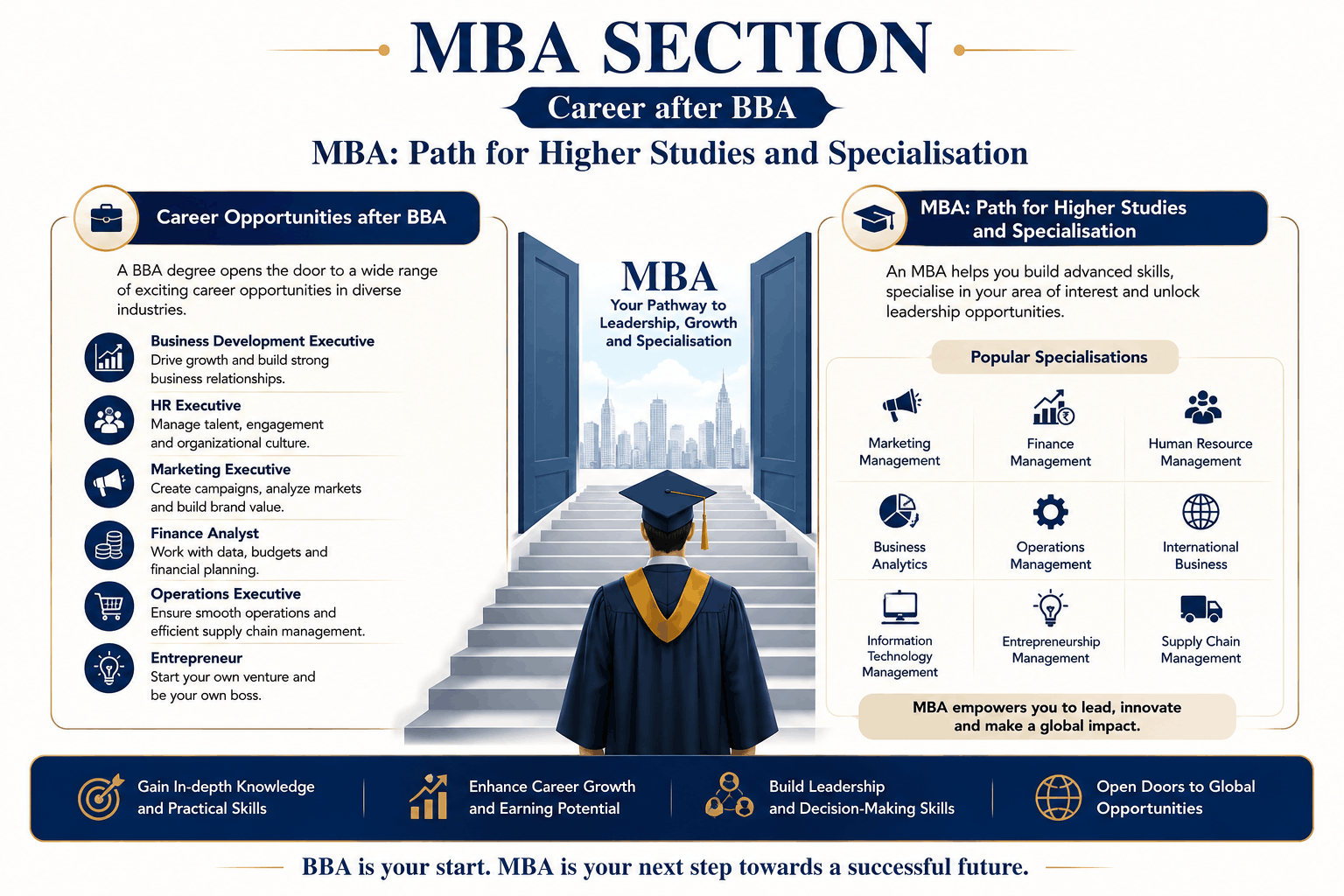
If you’re someone who wants to move up the ladder faster, or you want to specialise in a particular area, an MBA is a strong choice.
Here’s why so many BBA graduates go this route:
- It opens doors to leadership and management-level roles
- It allows you to specialise in fields like finance, HR, marketing, or operations
- Top business schools offer strong networking opportunities
- It typically leads to a noticeable salary jump compared to a BBA alone
That said, an MBA is a big commitment — both financially and time-wise. It’s worth asking yourself whether you want to study further right now, or whether some real-world work experience first might actually make your MBA application (and your learning) more valuable.
Many B-schools actually prefer candidates with at least a year or two of work experience, since it brings more depth into classroom discussions.
Option 3: Build Skills Through Certifications
Not ready for a full MBA, but want to stand out? Certifications are a smart, lower-commitment way to specialise.
Some worth considering:
- Digital Marketing Certification – useful given how much business has shifted online
- Financial Modelling and Valuation Analyst (FMVA) – great for finance-focused roles
- Chartered Financial Analyst (CFA) – ideal if you’re serious about investment or asset management
- Project Management Professional (PMP) – useful across almost every industry
- Human Resource Certification (SHRM or similar) – strengthens your HR career path
The best part? Most of these can be done while working, so you keep earning and learning at the same time.
Option 4: Start Your Own Business
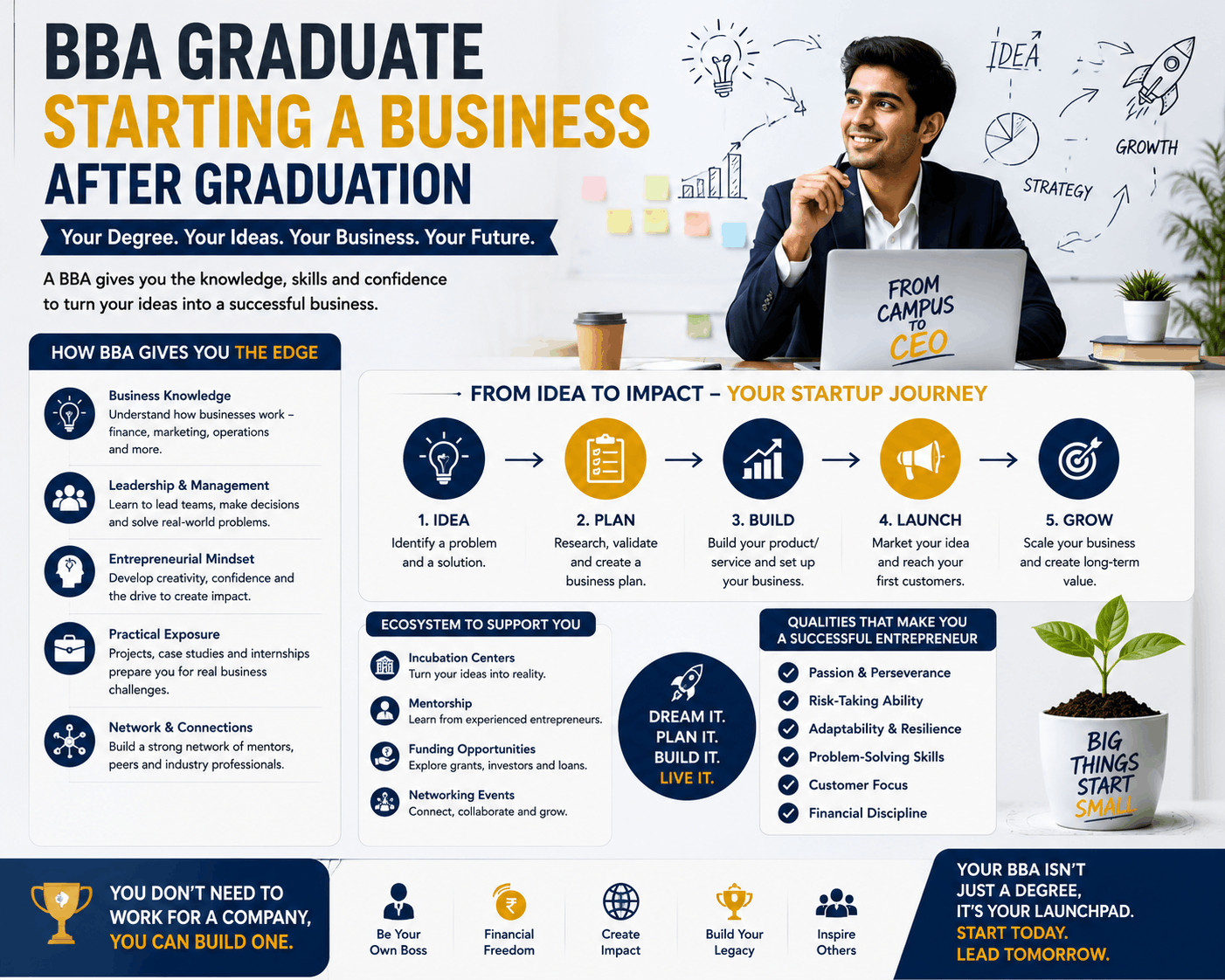
Here’s something people don’t talk about enough — a BBA actually sets you up pretty well for entrepreneurship.
Think about it. You already understand basic finance, marketing strategy, and operations management. That’s a solid starting toolkit for building something of your own.
If you’ve had a business idea sitting in the back of your mind, this stage of life — fewer responsibilities, more flexibility — might be the best time to test it out.
Of course, entrepreneurship comes with risk. But even if your first venture doesn’t work out, the lessons you’ll learn about business, sales, and resilience will be valuable for whatever you do next.
Option 5: Government and Public Sector Jobs
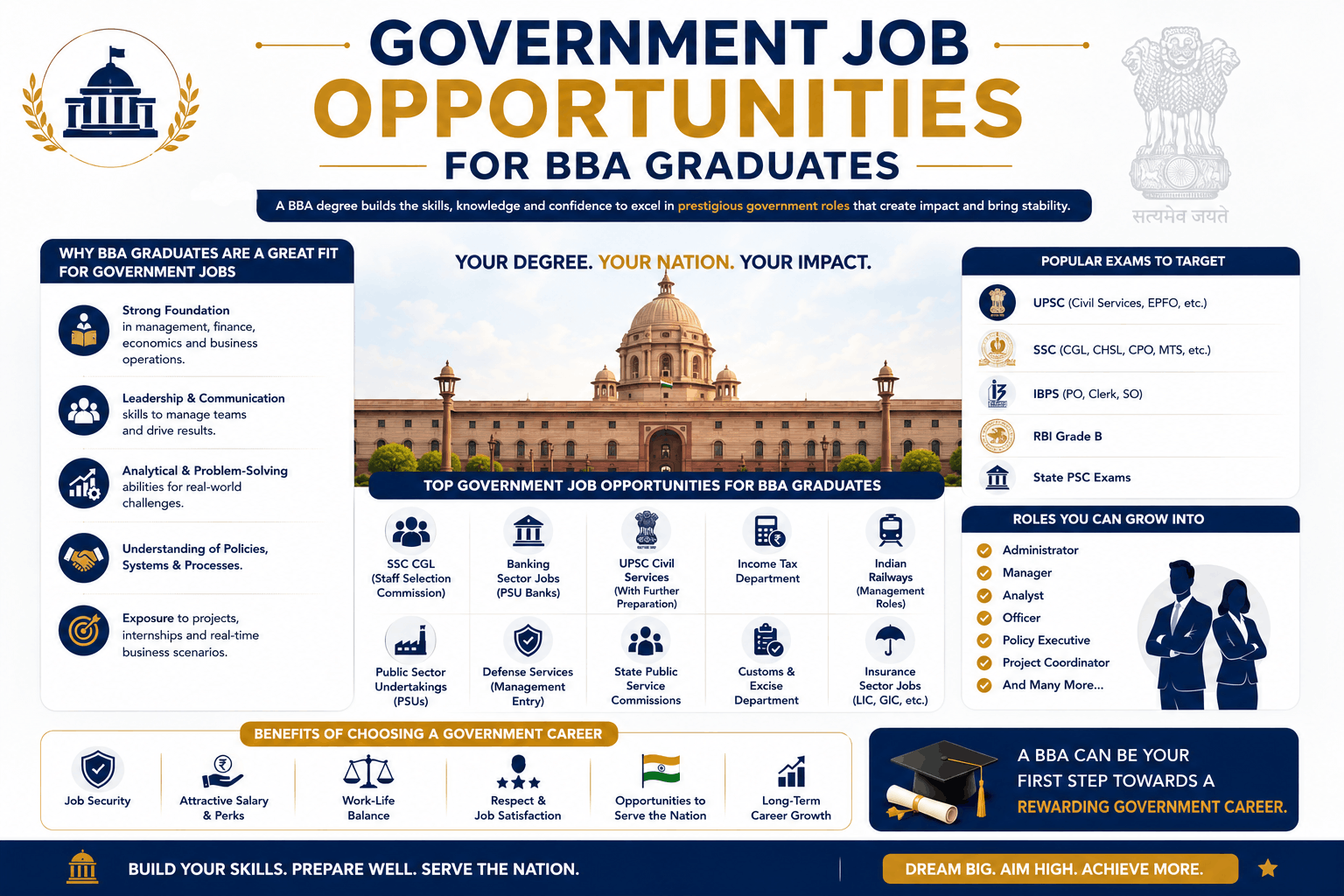
If stability and work-life balance matter more to you than a fast-paced corporate environment, government roles are worth exploring.
A BBA degree makes you eligible for:
- Banking exams like IBPS and SBI PO
- SSC CGL and other staff selection exams
- State-level administrative recruitment exams
- Public sector undertaking (PSU) job openings
These roles often come with long-term security, decent pay, and a more predictable lifestyle — appealing factors for many graduates.
Choosing a Career Field That Fits You
Beyond deciding your immediate next step, it helps to think about which broader field excites you. Here’s a quick breakdown.
Finance
Good for people who enjoy numbers, analysis, and structured thinking. Career options range from financial analyst to investment banking, especially if paired with an MBA or CFA.
Marketing
Perfect for creative thinkers who also enjoy strategy. With businesses investing heavily in digital marketing, this field is growing fast and offers plenty of entry points.
Human Resources
Ideal if you enjoy working with people, solving conflicts, and shaping workplace culture. HR has become more important than ever, especially with the rise of remote and hybrid work models.
Operations and Supply Chain
A great fit for detail-oriented problem solvers. Businesses always need smooth, efficient operations, which keeps this field consistently in demand.
International Business
If you’re interested in global markets, trade, and cross-cultural business strategy, this specialised area offers unique opportunities as companies continue expanding worldwide.
What About Salaries After BBA?
This is usually everyone’s real question, so let’s address it honestly.
Salaries after BBA vary a lot depending on your role, industry, location, and the company you join. Here’s a general sense of how things typically look:
- Entry-level roles generally offer moderate starting salaries, with steady increases as you gain experience
- An MBA can significantly boost your earning potential, especially from well-known business schools
- Specialised certifications like CFA or PMP often unlock higher-paying, niche roles
- Entrepreneurship has no fixed ceiling, but also no guaranteed income, especially in the early stages
The biggest factor in your long-term salary isn’t actually your BBA degree itself — it’s what you build on top of it through experience, skills, and continued learning.
How to Decide What’s Right for You
With so many directions to choose from, here’s a simple way to narrow things down.
Ask Yourself These Questions:
- What subjects did I genuinely enjoy during my BBA? Your natural interests are often the best indicator of where you’ll thrive.
- Do I want to study further, or start earning immediately? Be honest about your energy levels and financial situation.
- Do I prefer stability or am I comfortable with risk? This helps you choose between government jobs, corporate roles, or entrepreneurship.
- Where do I want to be in five years? Picture your ideal career, then work backward to figure out the steps to get there.
- Am I more people-focused or numbers-focused? This often points you toward HR/marketing versus finance/operations.
There’s no rush to have it all figured out perfectly. Careers evolve, and it’s completely normal to pivot later if something isn’t working for you.
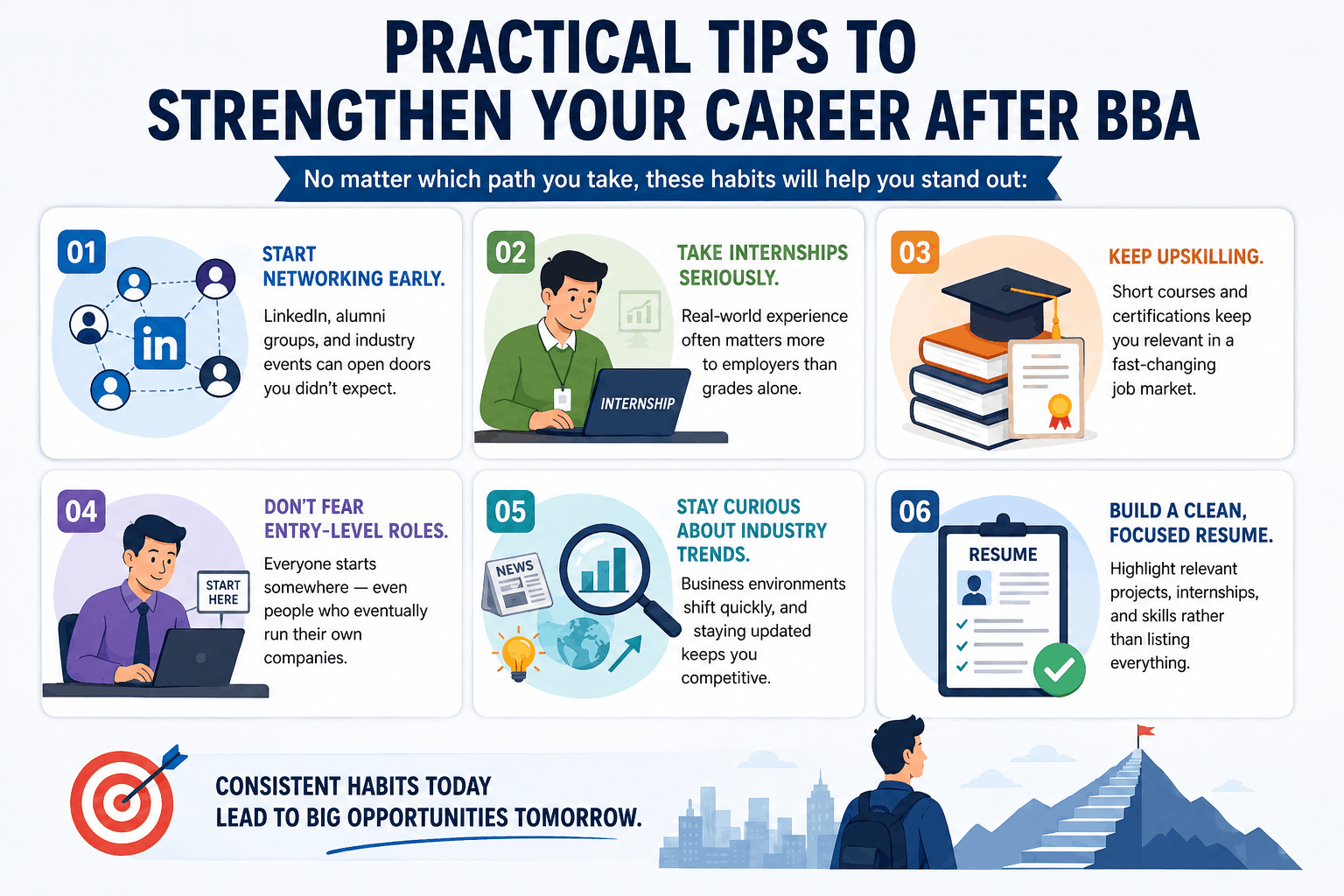
Practical Tips to Strengthen Your Career After BBA
No matter which path you take, these habits will help you stand out:
- Start networking early. LinkedIn, alumni groups, and industry events can open doors you didn’t expect.
- Take internships seriously. Real-world experience often matters more to employers than grades alone.
- Keep upskilling. Short courses and certifications keep you relevant in a fast-changing job market.
- Don’t fear entry-level roles. Everyone starts somewhere — even people who eventually run their own companies.
- Stay curious about industry trends. Business environments shift quickly, and staying updated keeps you competitive.
- Build a clean, focused resume. Highlight relevant projects, internships, and skills rather than listing everything.
Frequently Asked Questions
What is the best career option after BBA?
There isn’t one single “best” option — it depends on your interests and goals. Some graduates thrive with an MBA, others prefer jumping straight into a job, and some find success through certifications or entrepreneurship. The key is choosing based on what excites you, not just what seems popular.
Is it necessary to do an MBA after BBA?
No, it’s not necessary, but it can be helpful if you want to move into leadership roles faster or specialise further. Many successful professionals build strong careers with just a BBA, supported by relevant work experience and certifications.
What is the average salary after BBA?
Salaries vary widely based on role, industry, and location. Entry-level roles typically start at moderate pay, with growth depending on experience, certifications, or further studies like an MBA.
Can I get a government job after BBA?
Yes, a BBA degree makes you eligible for various government exams, including banking exams, SSC CGL, and several state-level recruitment processes.
Which is better after BBA — job or MBA?
Both are valid choices. A job lets you start earning and gaining real-world experience immediately, while an MBA can boost long-term earning potential and open doors to leadership roles. Your decision should depend on your financial situation, career goals, and whether you’re ready for further studies right now.
Can I become an entrepreneur right after BBA?
Absolutely. A BBA gives you foundational knowledge in finance, marketing, and operations — all useful for starting a business. Many graduates use this stage of life, with fewer responsibilities, to test out their own business ideas.
Final Thoughts
Deciding your career after BBA doesn’t need to feel like an impossible decision. This degree was designed to give you flexibility, not box you into one narrow path.
Whether you choose to study further, jump into a job, build specialised skills, start a business, or pursue stability through a government role — what matters most is that the choice aligns with your own interests and goals, not someone else’s expectations.
And if your first choice doesn’t turn out to be the right fit? That’s okay too. Careers rarely move in a straight line, and most successful professionals will tell you their path included a few unexpected turns along the way.
Your BBA got you to the starting line. What you do from here is entirely up to you.