
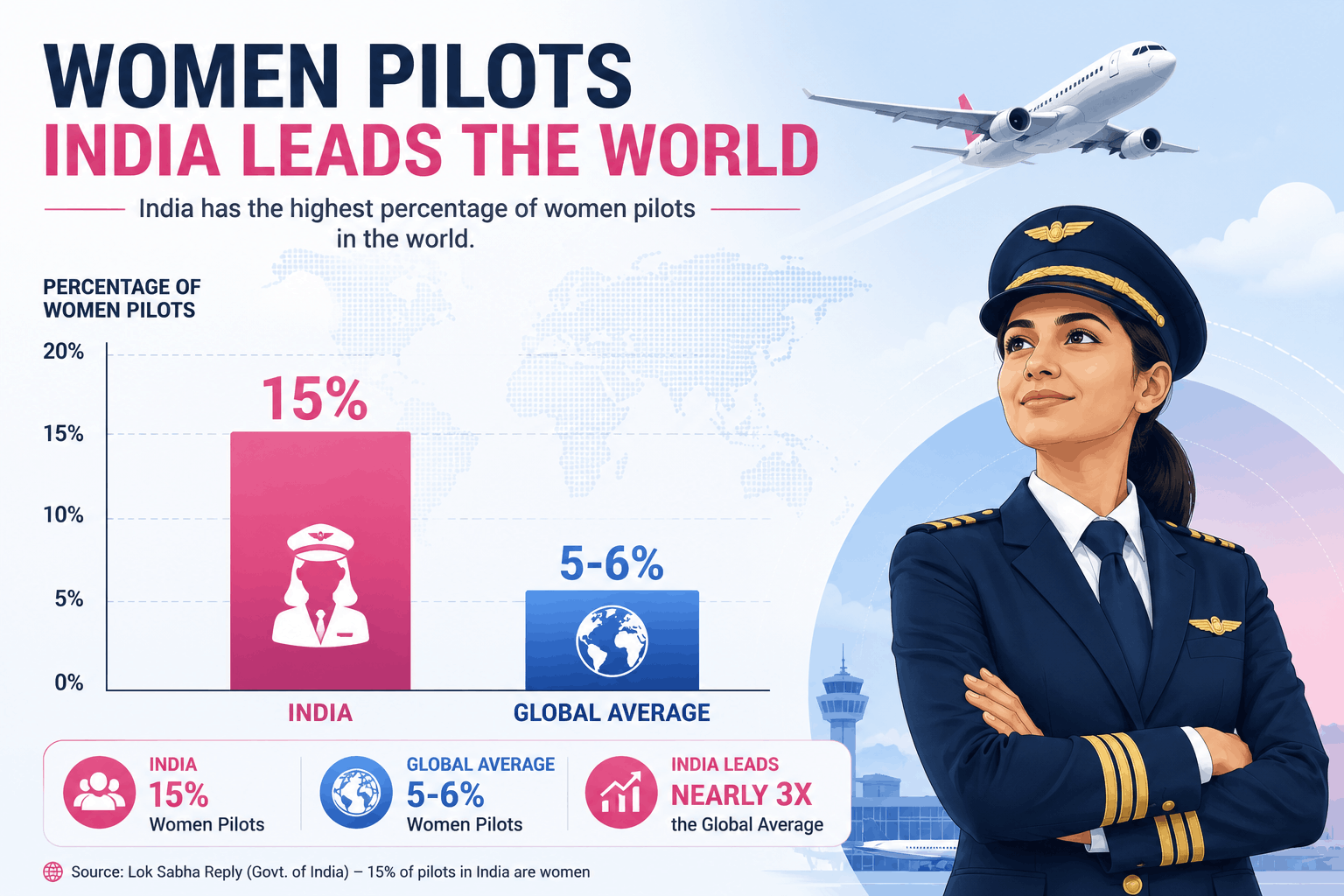
Here’s a fact that surprises a lot of people: India has the highest percentage of women pilots in the world. According to government data presented in the Lok Sabha, women make up roughly 15% of pilots in India — nearly three times the global average of 5-6%. If you’ve been considering a career as a pilot for girls, you’re not chasing an unusual dream. You’re joining a field where Indian women are already leading globally.
This guide walks you through exactly what a pilot career for girls in India actually involves — the eligibility, the training process, the real costs, the salary you can expect, and the practical steps to get from “I want to fly” to sitting in a cockpit.
Why a Career as a Pilot for Girls Makes Genuine Sense in India
Before getting into the how-to, it’s worth understanding why becoming a female pilot in India has become such a strong option for young women specifically.
- India leads the world in female pilot representation — per the same Lok Sabha data, 15% of India’s pilots are women, compared to a global average of just 5%
- Airlines are actively hiring more women pilots — IndiGo alone employs over 790 Indian women pilots, the highest number among domestic carriers, and has stated goals to keep growing this number
- Equal pay, equal opportunity — the DGCA (Directorate General of Civil Aviation) makes no gender distinction in eligibility criteria, and salary structures are identical for male and female pilots at the same rank
- Strong earning potential — from a starting First Officer salary to eventually becoming a Captain, the financial trajectory for a commercial pilot career for women is one of the strongest in India’s job market
This isn’t a token diversity statistic — it reflects real structural support, from government initiatives to airline-specific hiring goals aimed at increasing women’s representation in cockpits further.
Female Pilot Eligibility: What You Need to Qualify
The DGCA’s eligibility requirements are identical regardless of gender, which is genuinely one of the most reassuring aspects of pursuing this career in India.
Educational Requirements
- Class 12 completion, traditionally with Physics and Mathematics, since these have historically been mandatory for Commercial Pilot Licence (CPL) training
- Important 2026 update: According to DGCA Director General Faiz Ahmed Kidwai, the DGCA has formally approved a proposal to relax the Physics and Mathematics requirement, submitted to the Civil Aviation Ministry. This would allow arts and commerce students to qualify through bridging courses via NIOS (National Institute of Open Schooling). As of this writing, the change still requires final approval from the Ministry of Civil Aviation and the Ministry of Law before it becomes official — if you’re from a non-science background, check the current status directly with DGCA before assuming this applies to you yet
- English proficiency, typically requiring ICAO Level 4 or above, since aviation communication globally happens in English
Medical Requirements
- A Class 2 Medical Examination is required before you begin flight training, confirming basic fitness and health standards
- Once cleared, you’ll need a Class 1 Medical, which is mandatory before actually starting your CPL flight training
- These medical standards apply equally to all genders — there’s no separate or additional medical bar for women pursuing a career as a pilot
Age Requirement
You typically need to be at least 17 years old to begin private pilot training, with the Commercial Pilot Licence requiring you to be 18 or older to be issued.
How to Start a Career as a Pilot for Girls: Step-by-Step
Here’s the realistic path from finishing school to holding a Commercial Pilot Licence.
Step 1: Complete Class 12 With the Right Subjects
If pursuing the traditional route, complete Class 12 with Physics and Mathematics. If you’re from arts or commerce and the bridging-course pathway becomes fully available, you can pursue eligibility through NIOS instead.
Step 2: Get Your Medical Clearances
Complete your Class 2 Medical first, since this is required before enrolling in ground school. Your Class 1 Medical follows before actual flight training begins.
Step 3: Choose a DGCA-Approved Flying Training Organization (FTO)
Research flying schools carefully — both within India and abroad, since some students choose international training for cost or scheduling reasons. Look at instructor quality, aircraft availability, safety record, and how quickly students typically complete their training.
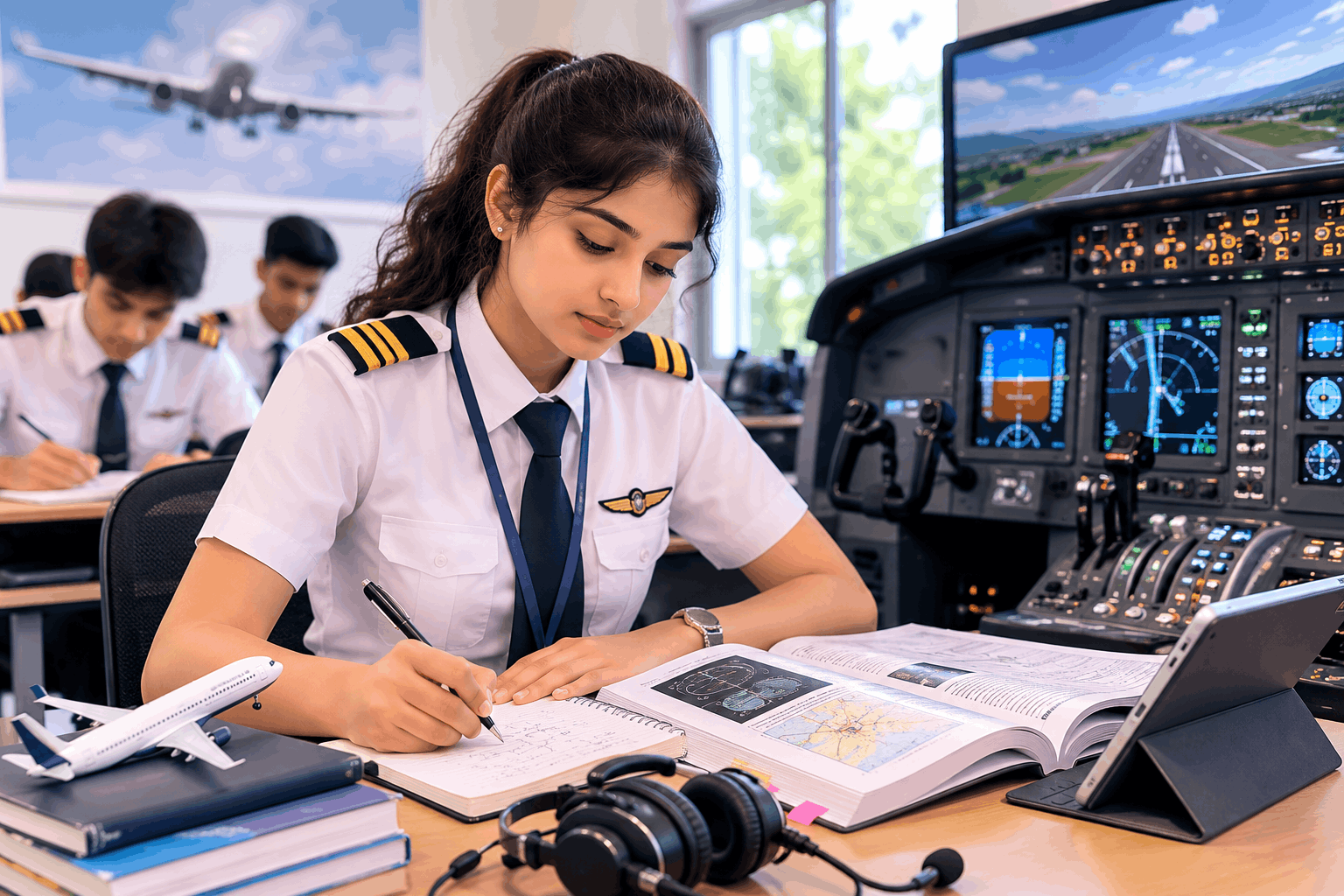
Step 4: Complete Ground School and Flight Training
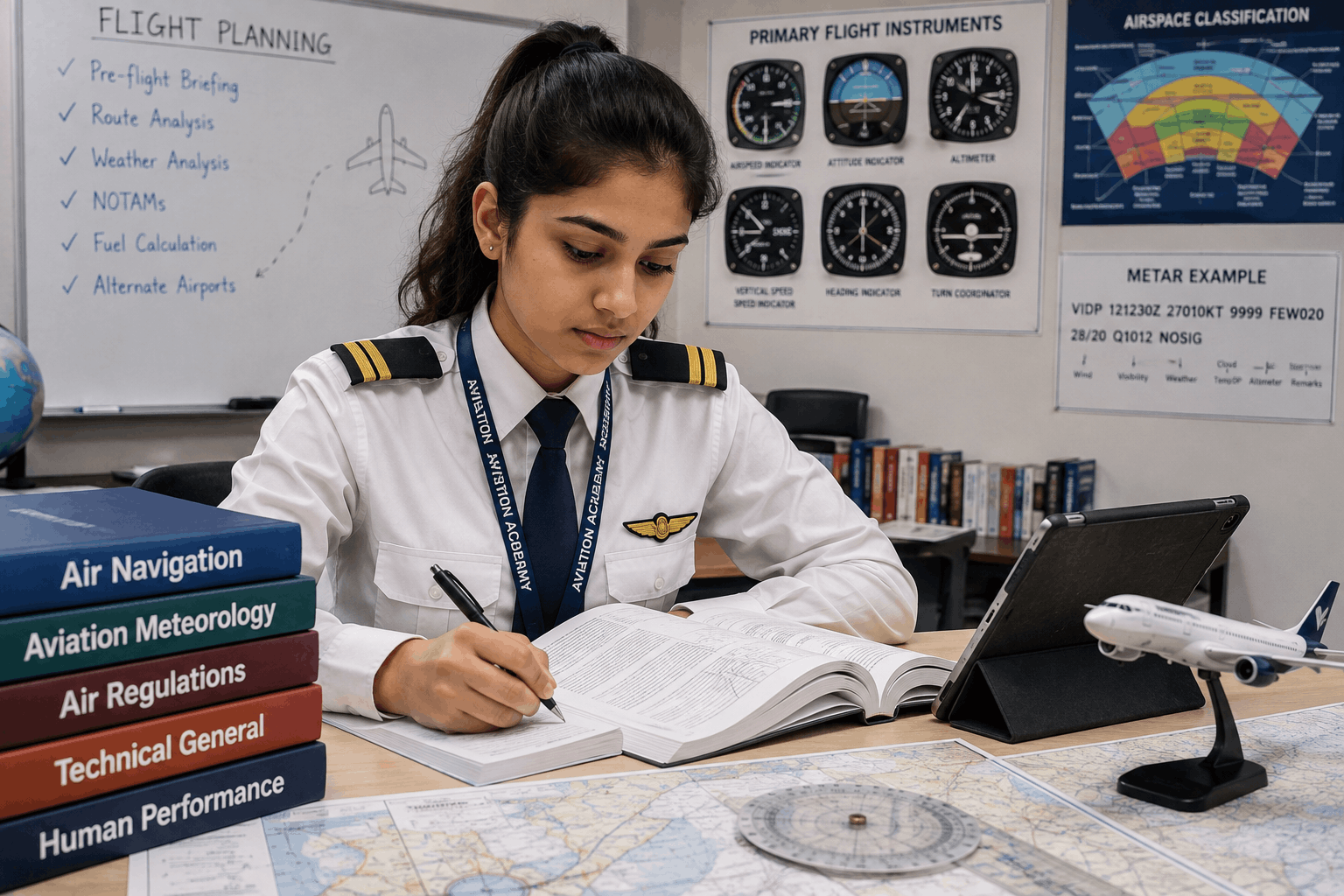
- Ground School covers subjects like Air Navigation, Aviation Meteorology, Air Regulations, and Technical General knowledge
- Flight Training involves dual flights (with an instructor) followed by solo flying hours under DGCA-certified aircraft
- A CPL program in India typically takes 8 to 10 months to complete, combining both components
Step 5: Clear Your DGCA Exams and Obtain Your CPL
You’ll need to pass the DGCA’s written examinations alongside your practical flying assessments to be issued your Commercial Pilot Licence.
Step 6: Get Your Instrument Rating (IR) and Multi-Engine Rating (ME)
These additional endorsements, usually completed as part of your CPL program, are essential for flying commercially as a co-pilot or First Officer with an airline.
Step 7: Apply for a Type Rating and Airline Selection
Most airlines require a Type Rating (specific to the aircraft you’ll fly) before hiring, which typically costs an additional ₹20-25 lakh. Many airlines also run Cadet Pilot Programmes that combine training sponsorship with a hiring guarantee, which is worth researching early.
The Real Cost of a Career as a Pilot for Girls
This is the part that catches a lot of families off guard, so it’s worth being upfront about it.
- Total CPL training cost in India generally ranges from ₹35 lakh to ₹55 lakh, though some reports cite figures as high as ₹70-80 lakh depending on the flying school, aircraft type, and how quickly a student completes training
- Cost breakdown by license type: Student Pilot License (₹10-20 lakh), Private Pilot License (₹15-25 lakh), and Commercial Pilot License (₹25-35 lakh) — though these ranges vary significantly by institute
- Type Rating (post-CPL, airline-specific): An additional ₹20-25 lakh
Given this wide range across sources, it’s genuinely important to get a detailed, written cost breakdown directly from your shortlisted flying school before enrolling, rather than budgeting off a single online estimate.
Financing a Career as a Pilot for Girls
- Education loans are available through several banks specifically for DGCA-approved flight training institutes
- Airline Cadet Pilot Programmes sometimes offer partial scholarships or sponsorship in exchange for a post-training service commitment
- Aviation-specific scholarships, though limited, do exist through select private programs and organisations like Women in Aviation International (WAI) India Chapter, which specifically supports young women, including those from low-income families, entering aviation
Salary Expectations for a Career as a Pilot for Girls
The earning potential is one of the strongest arguments for pursuing this path, and importantly, salary structures don’t differ by gender.
- First Officer (entry-level): Approximately ₹1.5-3 lakh per month
- Captain (with experience): Approximately ₹6-10 lakh per month or more, depending on the airline and aircraft type
Since pay scales are rank-based rather than gender-based, a woman reaching Captain rank earns the same as a man at the same rank and airline — a genuinely rare guarantee of pay equity in India’s broader job market.
Common Challenges in Pursuing a Career as a Pilot for Girls (and How to Navigate Them)
Challenge 1: The High Upfront Cost
This remains the single biggest barrier. Researching education loans, cadet programmes, and scholarship options early — rather than assuming you’ll figure out financing later — makes a real difference.
Challenge 2: Limited Awareness of the Field
Many young women simply aren’t exposed to aviation as a realistic career option early enough. Organisations like WAI India actively run awareness programs in schools specifically to address this gap.
Challenge 3: Family Concerns About an Unconventional Career Path
Given how strong India’s numbers already are for women in aviation — including growing airline hiring targets — sharing concrete statistics and success stories with hesitant family members can help reframe this as the well-established, respected career path it now genuinely is.
Challenge 4: Choosing the Right Flying School
With costs varying so widely between institutes, and training quality mattering enormously for your career prospects, researching multiple DGCA-approved FTOs — not just picking the first one you find — is worth the extra time upfront.
Inspiring Context: Women Have Been Flying in India Since 1936
A career as a pilot for girls in India isn’t a recent trend — it has real historical roots. Sarla Thukral became the first Indian woman to fly an aircraft in 1936, at just 21 years old, decades before most countries even began seriously considering women in aviation careers.
That legacy has compounded significantly in recent years:
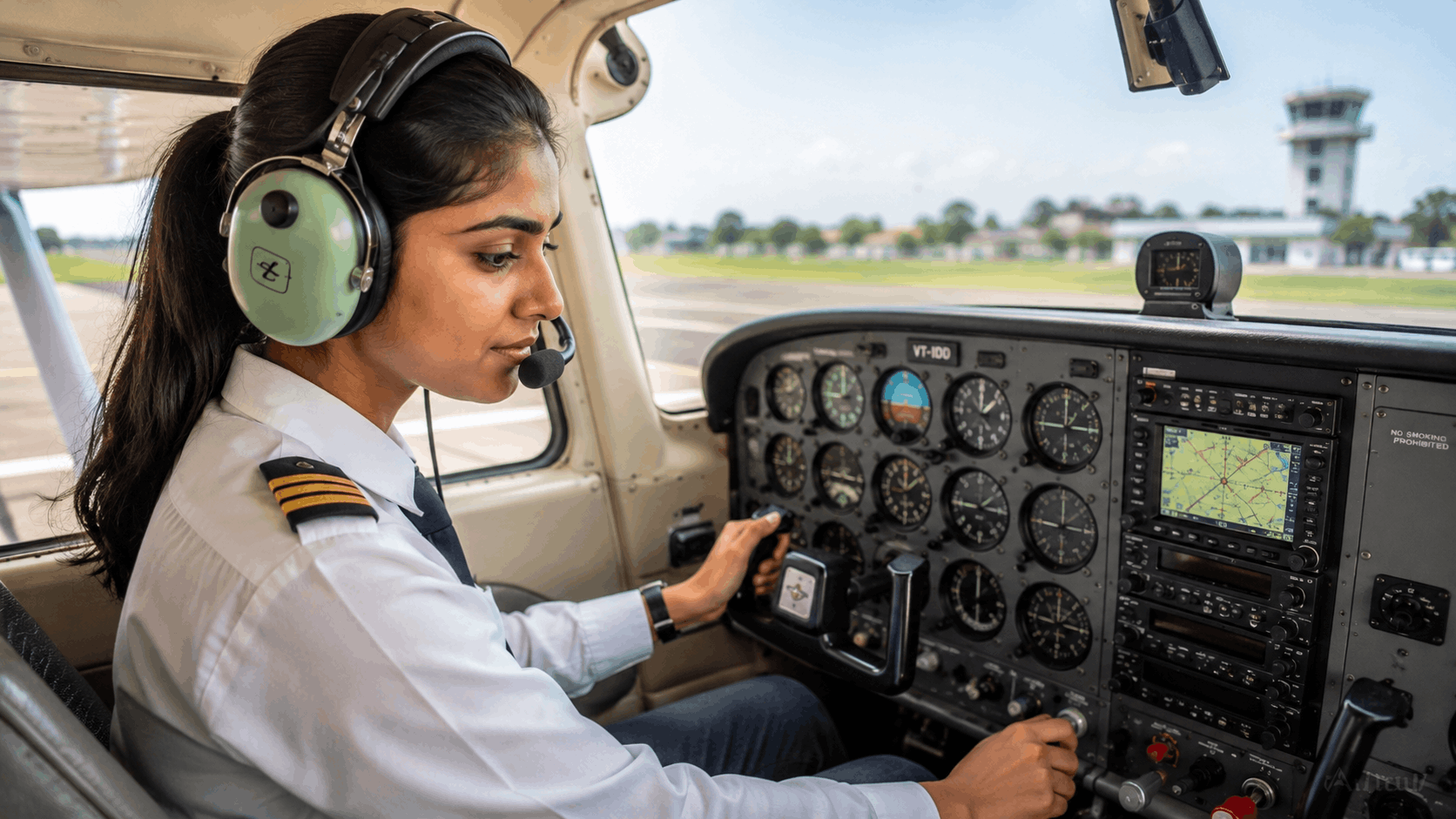
- India recorded nearly a 90% rise in active women pilots over the past four years, with more than 3,300 women pilots now active across the country
- In one recent year, 18% of newly issued commercial pilot licenses went to women — a 22% jump from the previous year, reflecting accelerating momentum rather than a plateau
- The government has stated ambitions to push women’s representation in aviation toward 25% of the workforce, meaning the structural support for this career path is likely to keep strengthening, not weakening
Understanding this trajectory helps put the decision in context: choosing a career as a pilot for girls today means entering a field during a period of active, accelerating growth in opportunities specifically for women — not just riding on historical progress made decades ago.
Frequently Asked Questions About Career as a Pilot for Girls
1. Is a career as a pilot for girls in India actually viable and well-supported?
Yes. India has the highest percentage of women pilots globally at around 15%, compared to a 5-6% global average, with several major airlines actively working to increase women’s representation further.
2. What subjects do I need in Class 12 to pursue a career as a pilot?
Traditionally, Physics and Mathematics have been required for CPL eligibility. As of 2026, the DGCA has approved relaxing this requirement, potentially allowing arts and commerce students to qualify through NIOS bridging courses, pending final ministry approval.
3. How much does it cost to become a pilot in India?
Total CPL training costs typically range between ₹35-55 lakh, though some flying schools report costs as high as ₹70-80 lakh. Always get a detailed cost breakdown from your specific chosen institute rather than relying on general estimates.
4. Do women pilots earn the same as male pilots in India?
Yes. Salary is determined by rank and experience, not gender. A female Captain earns the same as a male Captain at the same airline and aircraft type.
5. Are there scholarships specifically for a career as a pilot for girls?
Yes, though limited. Options include education loans from select banks, partial sponsorship through airline Cadet Pilot Programmes, and support through organisations like Women in Aviation International’s India Chapter.
6. How long does it take to become a commercial pilot in India?
A Commercial Pilot Licence (CPL) program typically takes 8 to 10 months to complete, combining ground school and flight training, though total timelines can extend depending on exam attempts and aircraft availability.
7. Which Indian airlines hire the most women pilots?
According to government data presented in Parliament, IndiGo employs the highest number of women pilots among Indian carriers, followed by Air India, SpiceJet, and Alliance Air, which has the highest proportion of women pilots relative to its total pilot workforce.
Final Thoughts on Career as a Pilot for Girls
A career as a pilot for girls in India isn’t a niche, uphill dream — it’s a field where Indian women already lead the world, backed by equal pay, growing airline demand, and increasing institutional support. The real challenges are practical ones: the significant upfront training cost, choosing the right flying school, and navigating financing options early.