
So, you’ve got your I-20, your SEVIS fee is paid, and your F1 visa interview date is finally booked. Exciting, right? But if you’re anything like most students, that excitement is probably mixed with a good amount of nervousness too.
Here’s the truth: the F1 visa interview isn’t designed to trip you up. It’s a short conversation — usually just 2 to 5 minutes — where a consular officer wants to understand one thing clearly: are you a genuine student who plans to study in the US and return home afterward
In this guide, we’ll walk you through the most common USA F1 visa interview questions, why officers ask them, how to answer confidently, and the small mistakes that quietly sink otherwise strong applications. By the end, you’ll know exactly what to expect and how to walk into that interview room with confidence instead of anxiety.

What Is the F1 Visa Interview, Really?
Before we jump into the questions, let’s quickly understand what’s actually happening in that room.
The F1 visa interview is conducted by a US consular officer at the embassy or consulate in your home country, following guidelines set by the U.S. Department of State and the Student and Exchange Visitor Program (SEVP). Their job isn’t to interrogate you — it’s to verify a few key things in a very short window of time:
- You’re a legitimate student with a real admission offer
- You can financially support your education and stay
- You have genuine ties to your home country
- You intend to return home after completing your studies
Officers see hundreds of applicants a day. They’re trained to make quick, instinct-driven decisions based on how naturally and confidently you answer. This is why clarity, honesty, and preparation matter so much more than memorized scripts.
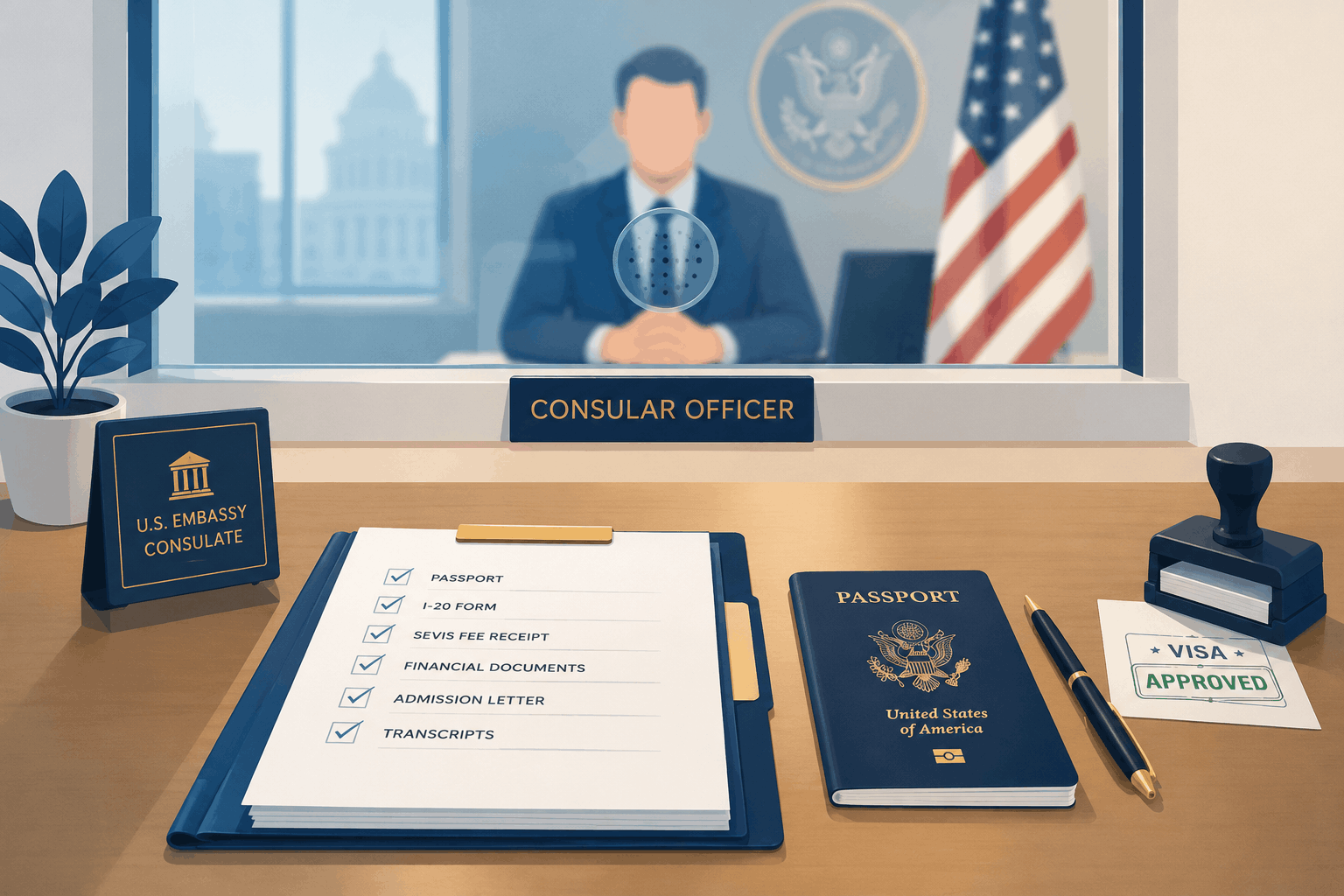
Documents You Should Carry to the Interview
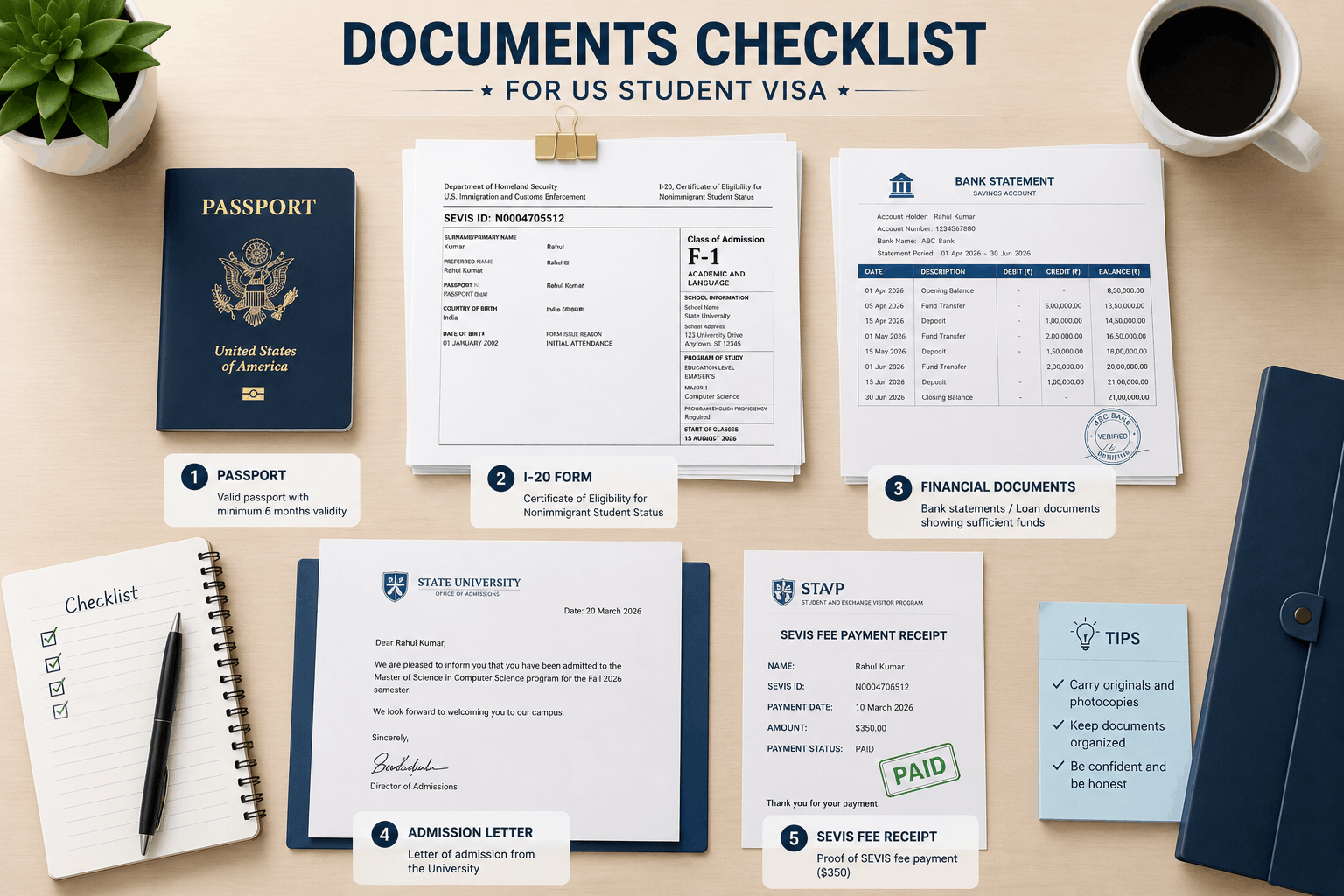
Before we get into the questions, let’s cover the basics. Having your documents organized isn’t just about compliance — it also makes you look prepared and serious, which works in your favor.
Here’s what you’ll typically need:
- Valid passport (with at least 6 months validity beyond your intended stay)
- DS-160 confirmation page
- I-20 form, signed by you and your school
- SEVIS fee payment receipt
- Visa appointment confirmation letter
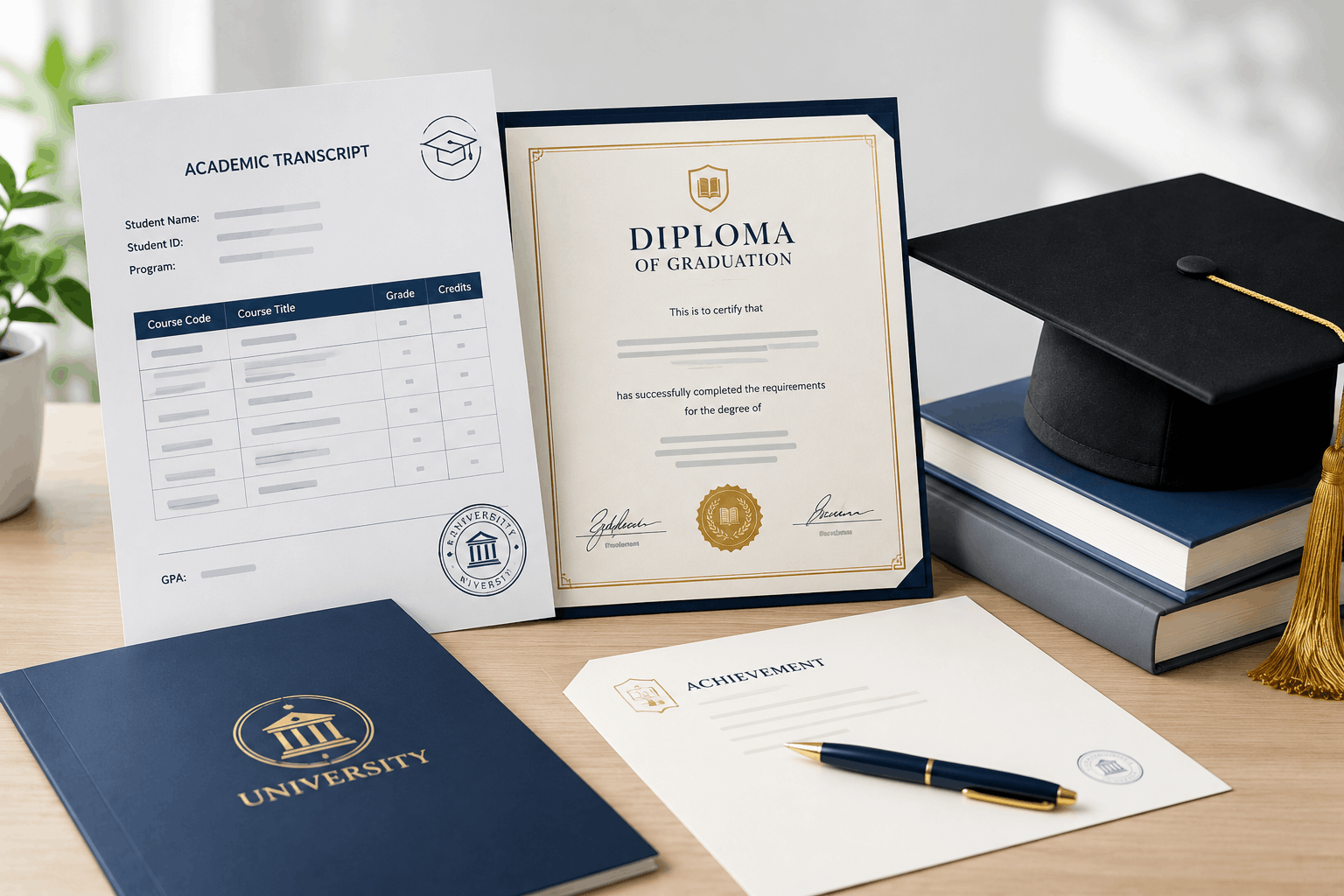
- Academic transcripts and certificates
- Standardized test scores (SAT, GRE, GMAT, IELTS, TOEFL, etc.)
- Financial documents (bank statements, loan approval letters, sponsor affidavits)
- Admission and scholarship letters, if any
Keep these in a neat folder. Fumbling through a messy stack of papers doesn’t create a great first impression.
Common USA F1 Visa Interview Questions (Category-Wise)
Let’s break the questions down by category, since that’s how officers usually structure the conversation.
1. Questions About Your Course and University
This is almost always where the interview starts. The officer wants to see that you’ve made a well-thought-out decision, not a random one.
Typical questions:
- Why did you choose this particular university?
- Why did you choose this course/major?
- Why not study this course in your home country?
- What do you know about the university?
- Have you received admission from any other universities?
How to answer well:
Be specific. Don’t just say “it’s a good university.” Mention something concrete — a professor whose research interests you, the university’s ranking in your field, specific coursework, or facilities that align with your goals.
For example, instead of saying “it has good faculty,” try: “The university’s data science program is ranked among the top 20 in the country, and it offers a specialization in machine learning that directly aligns with my career goals.”
2. Questions About Academic Background
Officers want to confirm that your academic history logically supports your decision to pursue this specific program.
Typical questions:
- What was your major in undergraduate studies?
- What was your GPA or percentage?
- Why did you have a gap year (if applicable)?
- How does your previous education connect to this course?
Tip: If you have a career gap or academic gap, don’t get defensive. Explain it simply and honestly — work experience, exam preparation, family circumstances, whatever it is. Officers aren’t looking for perfection; they’re looking for honesty and consistency.

3. Financial Questions
This is one of the most heavily scrutinized areas, because the US wants to ensure you won’t need to work illegally or become a financial burden.
Typical questions:
- Who is sponsoring your education?
- What does your sponsor do for a living?
- What is your sponsor’s annual income?
- How will you cover tuition and living expenses for the full duration of your course?
- Do you have an education loan? If so, how much?
How to answer well:
Know your numbers. You should be able to confidently state your total course cost, your living expenses, and exactly how these will be funded — savings, loans, scholarships, or a combination. If your parent or sponsor is funding you, know their occupation and approximate income without hesitation.
Vague answers here raise red flags faster than almost anything else.
4. Questions About Ties to Your Home Country
This might be the single most important category. The officer’s primary concern under US immigration law is whether you intend to return home after your studies. This is sometimes called demonstrating “non-immigrant intent.”
Typical questions:
- What are your plans after completing your degree?
- Do you plan to return to your home country?
- Do you have family in the US?
- What ties do you have to your home country? (property, family business, job offer, etc.)
How to answer well:
Be clear and confident about your future plans. You don’t need a rigid five-year plan, but you should express genuine intent to build your career using the skills and qualification you gain in the US.
Mentioning family, potential job opportunities back home, or long-term career goals tied to your country can help — but only if it sounds authentic, not rehearsed.
5. Questions About Post-Study Plans (OPT and Beyond)
Many students plan to use Optional Practical Training (OPT) after graduation, and that’s completely fine to mention — as long as you frame it correctly.
Typical questions:
- Do you plan to work in the US after your studies?
- What is OPT, and do you intend to use it?
- What will you do after OPT ends?
Tip: It’s okay to say you’d like to gain some practical experience through OPT. What matters is following that up with a clear intention to eventually return home or use that experience to build your career, rather than implying you plan to stay in the US permanently.
6. English Proficiency and Communication Questions
Sometimes officers throw in a casual question just to gauge how naturally you communicate in English, especially if your program is taught in English.
Typical questions:
- Tell me about your hometown.
- What do you do in your free time?
- Describe your daily routine.
These aren’t trick questions. They’re simply checking your comfort level with spoken English. Answer naturally, like you would in any normal conversation.
Quick Reference: Question Categories at a Glance
Here’s a snapshot table to help you revise everything in one glance before your interview.
| Category | What Officers Are Checking | Your Prep Focus |
|---|---|---|
| Course & University | Is your choice logical and well-researched? | Know specifics — rankings, faculty, coursework |
| Academic Background | Does your history support this course? | Be ready to explain gaps honestly |
| Financial Support | Can you fund the full program? | Memorize exact figures — tuition, sponsor income, loan amount |
| Home Country Ties | Will you return after your studies? | Speak confidently about family, career, and future plans |
| Post-Study Plans (OPT) | Is your OPT intent tied to your home country, not permanent stay? | Frame OPT as experience-building, not an exit from home plans |
| English Communication | Can you comfortably study in English? | Practice natural conversation, not memorized lines |
Why Do F1 Visas Get Refused? Understanding Section 214(b)
If there’s one thing that catches students off guard, it’s a refusal under Section 214(b) of the U.S. Immigration and Nationality Act. It’s worth understanding this clearly, because it’s the single biggest reason F1 visa applications don’t get approved.
Under U.S. law, every nonimmigrant visa applicant — including F1 students — is presumed to have “immigrant intent” until they prove otherwise. In simple terms: the burden is on you to convince the officer that you plan to return home after your studies, not the other way around.
A 214(b) refusal typically happens when an applicant:
- Cannot clearly demonstrate strong ties to their home country
- Gives vague, inconsistent, or unclear answers
- Has weak or unverifiable financial documentation
- Struggles to explain their study or career plans
- Shows uncertainty about returning home after completing the course
Here’s the good news: a 214(b) refusal isn’t permanent, and it isn’t a black mark on your record. It simply means the officer wasn’t convinced on that particular day, with that particular set of answers. You’re allowed to reapply, and many students who are refused once go on to get approved on a later attempt — especially once they’ve addressed the specific gap in their case, whether that’s clearer financial documentation, a more confident explanation of ties back home, or simply a calmer, more consistent interview performance.
If you’re refused, don’t reapply immediately with the exact same answers and documents. Take time to strengthen the specific weak point, and reapply once your case genuinely looks stronger.
Sample Answers to Practice With
Let’s look at a few examples so you get a feel for tone and structure.
Q: Why did you choose to study in the US instead of your home country?
A: “The program I’ve been admitted to offers a strong focus on applied research and industry collaboration, which isn’t available in the same depth at universities back home. This particular specialization will give me hands-on exposure that directly supports my long-term career goals.”
Q: How will you fund your education?
A: “My father runs a manufacturing business with an annual income of approximately [amount], and we’ve also secured an education loan of [amount] from [bank name] to cover the remaining tuition and living costs.”
Q: What are your plans after completing this degree?
A: “I plan to gain some practical industry experience through OPT for about a year, and then return home to apply what I’ve learned, ideally in a leadership role within the renewable energy sector, which is growing rapidly in my country.”
Notice how each answer is specific, confident, and free of unnecessary filler. That’s the tone to aim for.
Common Mistakes That Hurt F1 Visa Applications
Even strong candidates sometimes get rejected because of avoidable errors. Watch out for these:
- Memorized, robotic answers — Officers can tell instantly when you’re reciting a script rather than speaking naturally.
- Vague financial answers — Not knowing your sponsor’s income or how fees will be paid looks unprepared.
- Inconsistent information — If your DS-160 form and your spoken answers don’t match, it raises suspicion.
- Overqualified or underqualified course choice — If your chosen course doesn’t logically follow your academic or career background, be ready to explain the connection clearly.
- Sounding unsure about returning home — Even subtle hesitation here can be interpreted negatively.
- Poor documentation — Missing or disorganized paperwork suggests a lack of seriousness.
Quick Tips to Feel More Confident on Interview Day
- Sleep well the night before — nervous energy comes through in your voice.
- Dress formally; it signals seriousness without needing to say a word.
- Reach the consulate early to avoid last-minute stress.
- Keep your answers between 20–40 seconds. Long-winded responses can dilute your key message.
- Maintain eye contact and a calm tone, even if you’re nervous inside.
- If you don’t understand a question, it’s okay to politely ask the officer to repeat it.
Remember, most F1 visa interviews are quick. If you’re clear, honest, and reasonably prepared, you’re already ahead of a large chunk of applicants who walk in unprepared.

Frequently Asked Questions (FAQs)
1. How long does an F1 visa interview usually take?
Most interviews last between 2 to 5 minutes. It’s a quick, decisive conversation, not a long interrogation, so there’s no need to over-prepare lengthy answers.
2. What if I don’t know the answer to a question?
It’s completely fine to say you’re not sure, rather than making something up. Honesty is valued far more than a perfect-sounding but inconsistent answer.
3. Can I get rejected on the spot?
Yes, in many cases, the officer informs you of the decision immediately after the interview. If rejected, you’ll usually receive a refusal slip mentioning the section of law under which your visa was denied.
4. Is it okay to have a slight accent or make small grammar mistakes while speaking English?
Absolutely. Officers are not evaluating your accent or grammar perfection — they’re assessing whether you can communicate clearly enough to study in an English-speaking environment.
5. What should I do if my visa gets rejected?
You can reapply for the F1 visa. Take time to understand why it was refused, strengthen the weak areas (usually financial clarity or ties to home country), and prepare more thoroughly before your next attempt.
6. Do I need to bring my laptop or phone to the interview?
No. In most consulates, electronic devices aren’t allowed inside. Carry only the required physical documents.
7. Should I memorize my answers word-for-word?
No. Memorized answers tend to sound unnatural and can backfire if the officer asks a follow-up question you haven’t scripted for. It’s better to understand the key points you want to communicate and speak naturally.
Final Thoughts
At the end of the day, the F1 visa interview is simply a conversation to confirm what your application already shows on paper — that you’re a genuine student with a clear purpose and a plan for the future.
You don’t need to be perfect. You just need to be prepared, honest, and confident in your own story. Know your course, know your finances, and know why you’re making this choice.
Take a deep breath, review this guide once more before your interview day, and walk in knowing you’ve done the preparation that most applicants skip. That alone puts you a step ahead.
U.S. Department of State – Student Visa: https://travel.state.gov/content/travel/en/us-visas/study/student-visa.html