A few years ago, if someone told you that you could learn a new skill, prepare for competitive exams, or even complete a full degree — all from your bedroom, in your pyjamas, at 11 PM — you’d probably have laughed it off.
Today? That’s just Tuesday.
Online learning platforms have quietly become one of the biggest shifts in how people learn. Whether it’s a college student trying to pick up coding, a working professional switching careers, or a parent finally getting back to studying after years, the shift toward online education isn’t a trend anymore. It’s the new normal.
But is it actually worth it? Or is it just convenient hype?
In this guide, we’re breaking down the real, practical benefits of online learning platforms — no fluff, no exaggerated claims, just what actually matters if you’re thinking about learning online in 2026.

Why Online Learning Platforms Are Booming Right Now
Let’s start with the obvious question: why now?
A few things came together at the same time:
- Internet access became affordable and widespread, even in smaller towns and cities
- Smartphones turned into powerful learning devices, not just entertainment tools
- Traditional education costs kept rising, pushing people to look for alternatives
- Companies started valuing skills over degrees, especially in tech, marketing, and design
- The pandemic forced millions of people to try online learning — and many simply never went back
Put all of that together, and you get a generation of learners who expect flexibility, affordability, and control over how they study. Online platforms delivered exactly that.
The numbers back this up too. Industry research from Statista and Global Market Insights estimates the global e-learning market crossed the $300 billion mark in 2025, and it’s still climbing fast. This isn’t a niche trend anymore — it’s one of the fastest-growing segments in education worldwide.
1. Learn Anytime, Anywhere — On Your Own Terms
This is the single biggest reason people choose online learning, and it’s not even close.
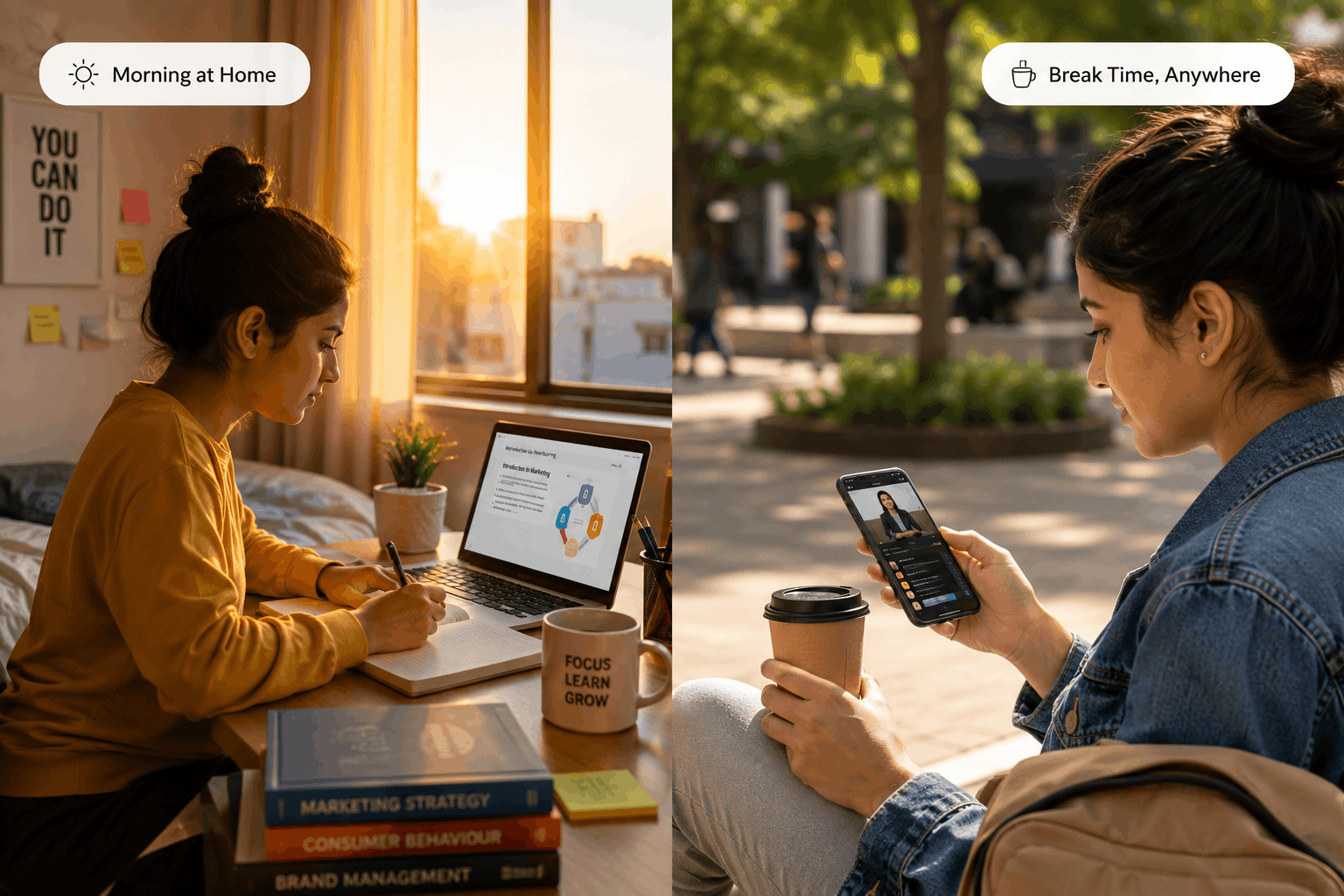
With traditional classrooms, you show up when you’re told to, whether or not it works for your life. With online learning, your schedule bends around you, not the other way around.
Here’s what that actually looks like in practice:
- A college student can study between classes or late at night
- A working professional can complete lessons during lunch breaks or after office hours
- A stay-at-home parent can learn while managing household responsibilities
- Someone in a smaller town isn’t limited by what institutes exist nearby
You’re also not losing anything if you miss a session. Recorded lectures mean you can rewind, pause, and revisit topics as many times as you need — something a physical classroom simply can’t offer.
2. It’s Usually Far More Affordable
Let’s talk money, because this matters a lot, especially for Indian students and families balancing tight budgets.
Traditional education comes with a long list of hidden costs:
- Commuting expenses
- Hostel or accommodation fees if you’re studying away from home
- Physical books and study material
- Coaching institute fees on top of college fees
Online learning platforms cut out most of these costs. Many offer:
- Free trial lessons before you commit
- Affordable monthly or yearly subscriptions
- One-time course fees instead of recurring semester costs
- Free scholarships or discounts for eligible students
This doesn’t mean online learning is always “cheap” — quality courses do cost money. But rupee for rupee, you’re often getting more value, since you’re not paying for infrastructure, hostel facilities, or commuting time you’ll never get back.
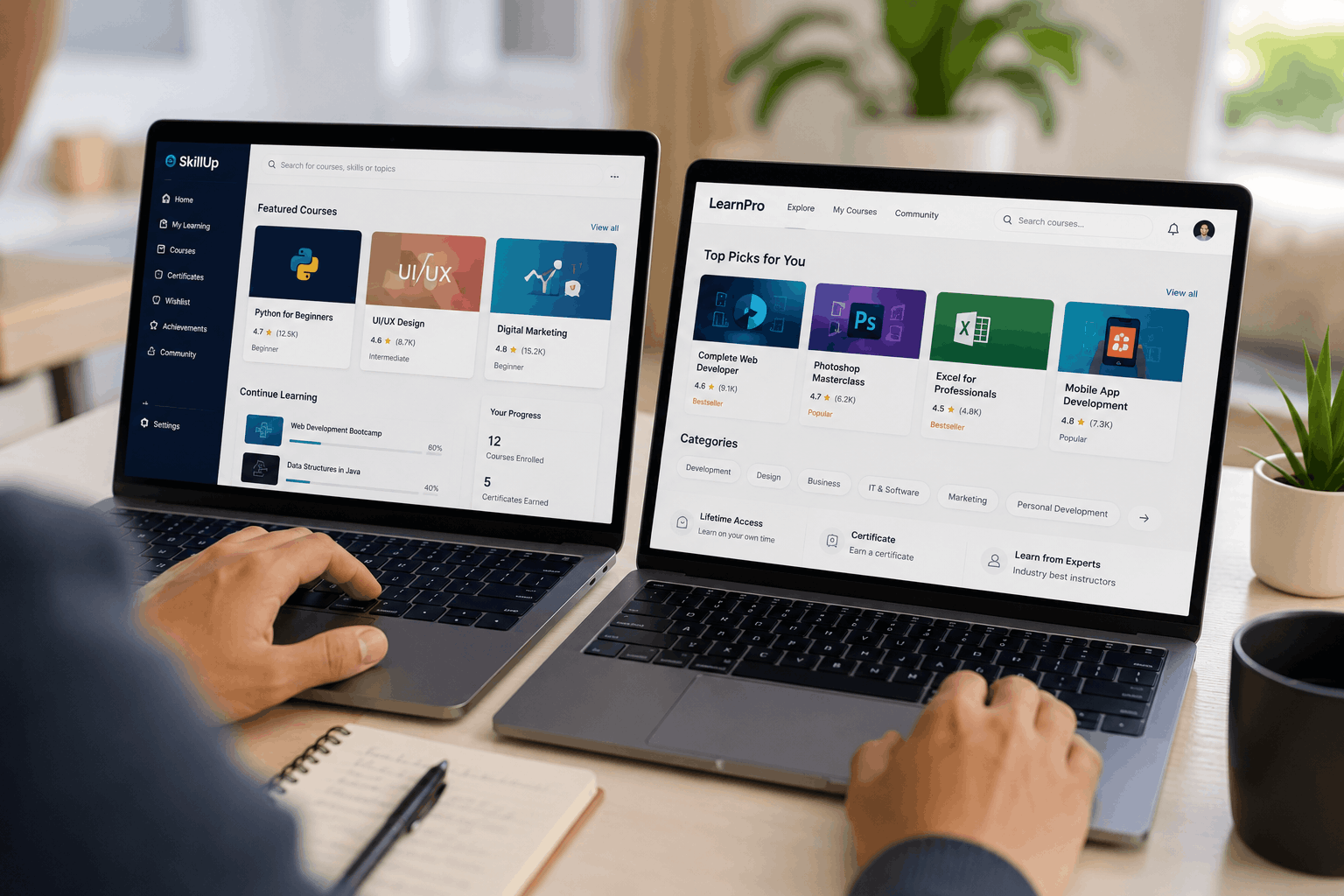
3. Access to Far More Courses Than Your City Can Offer
Here’s something people don’t think about enough: your local college or institute can only offer a limited number of courses, taught by a limited number of instructors.
Online platforms remove that ceiling completely.
With a good internet connection, you can:
- Learn digital marketing from an expert based in another country
- Take a data science course designed by an actual industry professional
- Explore niche subjects that simply don’t exist in your local curriculum
- Compare multiple instructors and teaching styles before choosing one
This is a huge win, especially for students in Tier 2 and Tier 3 cities in India, where access to specialised courses used to be extremely limited.

4. Self-Paced Learning Actually Helps You Understand Better
Not everyone learns at the same speed — and that’s completely normal, even though traditional classrooms rarely account for it.
In a typical classroom, the teacher moves at one fixed pace for the entire class. If you’re a little behind, you’re stuck trying to catch up while new topics keep piling on.
Online learning flips this completely:
- Struggling with a topic? Rewatch the lesson as many times as you need
- Already understand something? Skip ahead without wasting time
- Want to test yourself? Most platforms include quizzes and practice tests
- Need a break? Pause and come back whenever you’re ready
This self-paced structure often leads to deeper understanding, simply because you’re not rushing through material just to keep up with a group. In fact, research cited by industry reports suggests learners can retain 25% to 60% more information through e-learning, compared to just 8% to 10% in traditional classroom settings — largely because they can revisit material at their own pace instead of moving on before it truly sinks in.
5. Skill-Based Learning That Actually Matches What Employers Want
Here’s a shift that’s happened quietly but powerfully: employers today care far more about what you can actually do than where you studied.
Online learning platforms have adapted to this by focusing heavily on practical, job-ready skills:
- Coding and web development
- Digital marketing and SEO
- Data analysis and visualization
- Graphic design and UI/UX
- Project management and business analytics
Many of these courses are designed with direct input from industry professionals, meaning what you learn maps closely to what companies are actually hiring for — not outdated theory that looks good on paper but doesn’t help in a real job.
This shift is backed by data too. Reports from sources like the IMF and major workforce studies note that demand for formal degrees is declining across many tech roles, with employers increasingly favoring demonstrated skills over credentials alone. Nearly 90% of organizations now use some form of digital learning for employee training, which shows just how mainstream skill-based, online-first learning has become — not just for students, but for the entire workforce.
This is exactly the kind of practical, career-focused education that platforms like Asethetic Edu aim to guide students toward, by helping them understand which skills and courses actually lead somewhere. (For a deeper dive into planning your career path, check out our Career Guidance section.)

6. Better for Students Preparing for Competitive Exams
If you’re an Indian student preparing for NEET, JEE, UPSC, or other competitive exams, online learning platforms have genuinely changed the game.
Here’s how:
- Access to top faculty from across the country, not just your local coaching center
- Structured test series and mock exams to track your progress
- Doubt-clearing sessions, often available 24/7 through chat or forums
- Previous years’ question papers and detailed analysis, all in one place
Instead of relying entirely on one local coaching institute, students can now combine multiple resources, compare teaching styles, and build a preparation strategy that actually works for them. (If you’re preparing for medical entrance exams, our detailed NEET Result Breakdown 2026 guide is a great next read.)
7. Builds Independent Learning and Discipline
This benefit doesn’t get talked about enough, but it matters a lot.
Online learning requires you to manage your own time, stay accountable without someone physically checking on you, and push yourself to complete lessons. That sounds hard at first, but it builds a skill that’s incredibly valuable long-term: self-discipline.
Students who learn how to structure their own study time, set goals, and follow through without constant supervision often carry that skill into their careers — where self-motivation matters just as much as technical knowledge.

How to Choose the Right Online Learning Platform
Not all online courses are created equal. Some are genuinely well-structured; others are just a pile of videos with no real direction.
Before you enroll in any course, check for these things:
- Clear course structure — Does it follow a logical progression, or does it feel random?
- Instructor credibility — Do they have real experience, or just good presentation skills?
- Interactive elements — Are there quizzes, assignments, or projects to test your understanding?
- Certification value — Will this certificate actually help your resume or college application?
- Support system — Can you ask questions and get real, helpful answers when stuck?
- Reviews and testimonials — What do actual past students say about their experience?
A platform that checks these boxes will give you a genuinely useful learning experience, instead of just another subscription you forget about after a week.
Common Challenges With Online Learning (And How to Handle Them)
Online learning isn’t perfect, and it’s worth being upfront about that.
Challenge: Staying motivated without a physical classroom Set a fixed study time each day, even if it’s just 30-45 minutes, and treat it like an unmissable appointment.
Challenge: Feeling isolated or unsupported Join discussion forums, study groups, or community chats within the platform. Many courses have active peer communities.
Challenge: Getting distracted at home Create a dedicated study corner, even a small one, and keep your phone away during study sessions.
Challenge: Information overload from too many free resources Stick to one structured course at a time instead of jumping between multiple free YouTube videos and courses. Structure matters more than volume.
Most challenges with online learning come down to one thing: structure. Once you build a routine around it, online learning becomes just as disciplined — often more so — than attending physical classes.
Who Benefits the Most From Online Learning Platforms?
While almost anyone can benefit from online learning, certain groups see especially strong results:
- Working professionals looking to upskill without quitting their jobs
- Students in smaller towns who don’t have access to specialised local institutes
- Competitive exam aspirants who want flexible, structured preparation
- Career switchers exploring a new field before fully committing to it
- Parents or homemakers restarting their education journey on their own schedule
If you fall into any of these categories, online learning isn’t just a convenient option — it’s often the smarter one. And if you’re also weighing options like studying overseas, our guide on Study Abroad Australia breaks down what to expect in 2026.
Frequently Asked Questions
1. Are online learning platforms as effective as traditional classrooms?
In most cases, yes. Structured online courses with quizzes, assignments, and regular assessments can lead to retention rates similar to, or even better than, traditional classrooms — especially for self-motivated learners.
2. Do employers actually value online certifications?
Increasingly, yes. Employers today focus more on demonstrable skills than the format in which they were learned. A certification from a reputable, well-structured platform can carry real weight, especially in tech, marketing, and design roles.
3. How many hours per week should I dedicate to online learning?
This depends on the course, but most learners see solid results with 4-6 hours per week of consistent, focused study, rather than occasional long, exhausting sessions.
4. Can complete beginners learn a new skill online without prior experience?
Absolutely. Most beginner-friendly platforms design their courses assuming zero prior knowledge, building concepts gradually with examples and guided practice.
5. Is online learning suitable for competitive exam preparation like NEET or JEE?
Yes, and it’s become one of the most popular methods for exam preparation in India, offering access to top faculty, structured test series, and flexible study schedules that fit around school or coaching commitments.
6. What’s the biggest mistake people make with online learning?
Signing up for too many courses at once and completing none of them. It’s far more effective to finish one course thoroughly than to start five and abandon them halfway.
7. Are free online courses worth it, or should I pay for structured ones?
Free resources are great for exploring a topic casually, but structured, paid courses usually offer better guidance, support, and accountability — which matters a lot if you’re serious about actually finishing what you start.
Final Thoughts
Online learning isn’t a backup option anymore — for many students and professionals, it’s genuinely the smarter, more practical choice. It’s flexible, often more affordable, skill-focused, and built around how people actually want to learn today.
Whether you’re a student trying to prepare for a competitive exam, a professional looking to switch careers, or someone simply curious about a new skill, the barriers that used to stop people from learning — time, location, cost — don’t really hold up and the flexibility are already there. All that’s left is deciding to start.
eLearning market size & growth (2026)
https://www.demandsage.com/elearning-statistics/