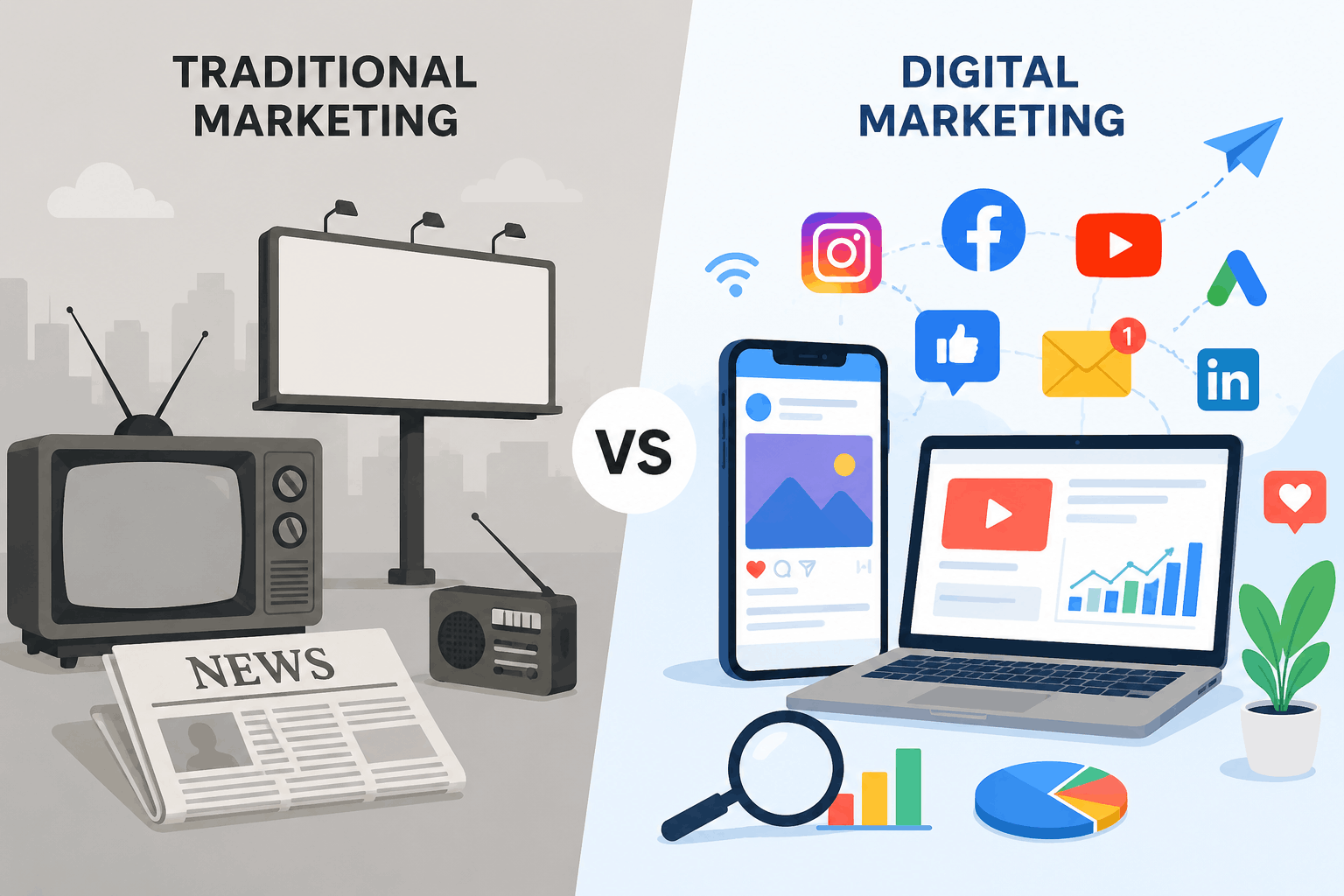
Remember when “marketing” just meant TV ads, newspaper inserts, and a hoarding on the highway? Those days are mostly gone. Today, if a brand isn’t on Instagram, running Google Ads, or sending you those slightly-too-personalized emails, it barely exists.
That shift has a name: digital marketing. And it hasn’t just changed how businesses sell things — it has quietly become one of the most accessible, flexible, and well-paying career paths for students and graduates in India.
If you’ve been wondering whether digital marketing is worth learning, which courses actually help, or what jobs you can get once you’re skilled, this guide covers all of it — courses, skills, job roles, salaries, and a step-by-step way to get started.
If you’re still deciding on a broader career direction, our career guidance guide for confused students is a good place to start before narrowing down to a specific field like this one
What Is Digital Marketing?
In simple terms, digital marketing is the practice of promoting products, services, or brands through online channels instead of traditional ones like print or television.
This includes:
- Search engines (Google, Bing)
- Social media platforms (Instagram, LinkedIn, YouTube)
- Email marketing
- Websites and blogs
- Paid online advertisements
The biggest advantage over traditional marketing is measurability. Instead of guessing whether an ad worked, digital marketing lets you track clicks, views, sign-ups, and sales in real time. That’s exactly why every business — from a local bakery to a multinational company — now needs someone who understands digital marketing.
Why Digital Marketing Is a Strong Career Choice in 2026
A fair question students often ask: “Isn’t this field already crowded?” It’s a valid concern, but here’s why there’s still plenty of room.
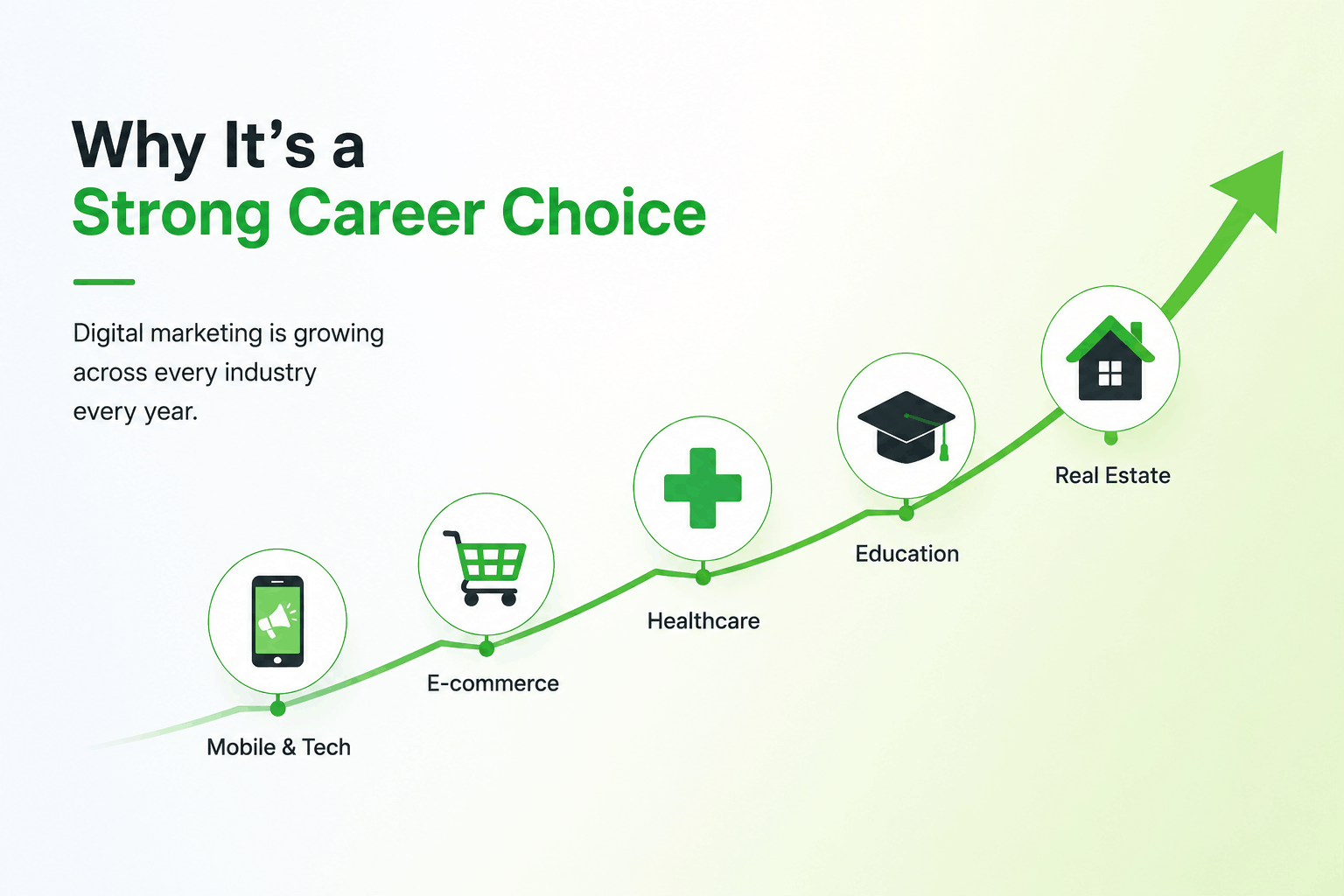
1. Demand Keeps Growing Every Year
More businesses move online every year, and even sectors that once felt purely “offline” — like real estate, healthcare, and education — now depend on digital marketing to reach customers. The job market for this skill set isn’t shrinking; it’s expanding into new industries.

2. No Specific Degree Required
Unlike careers in medicine or law, digital marketing doesn’t demand a particular educational background. Whether you’re a commerce graduate, an engineering student, or from the arts stream, you can build a career here as long as you’re willing to learn the skills. (If you’re coming from an arts background specifically, our guide on career options after 12th Arts has more paths worth exploring.)

3. Multiple Career Paths in One Field
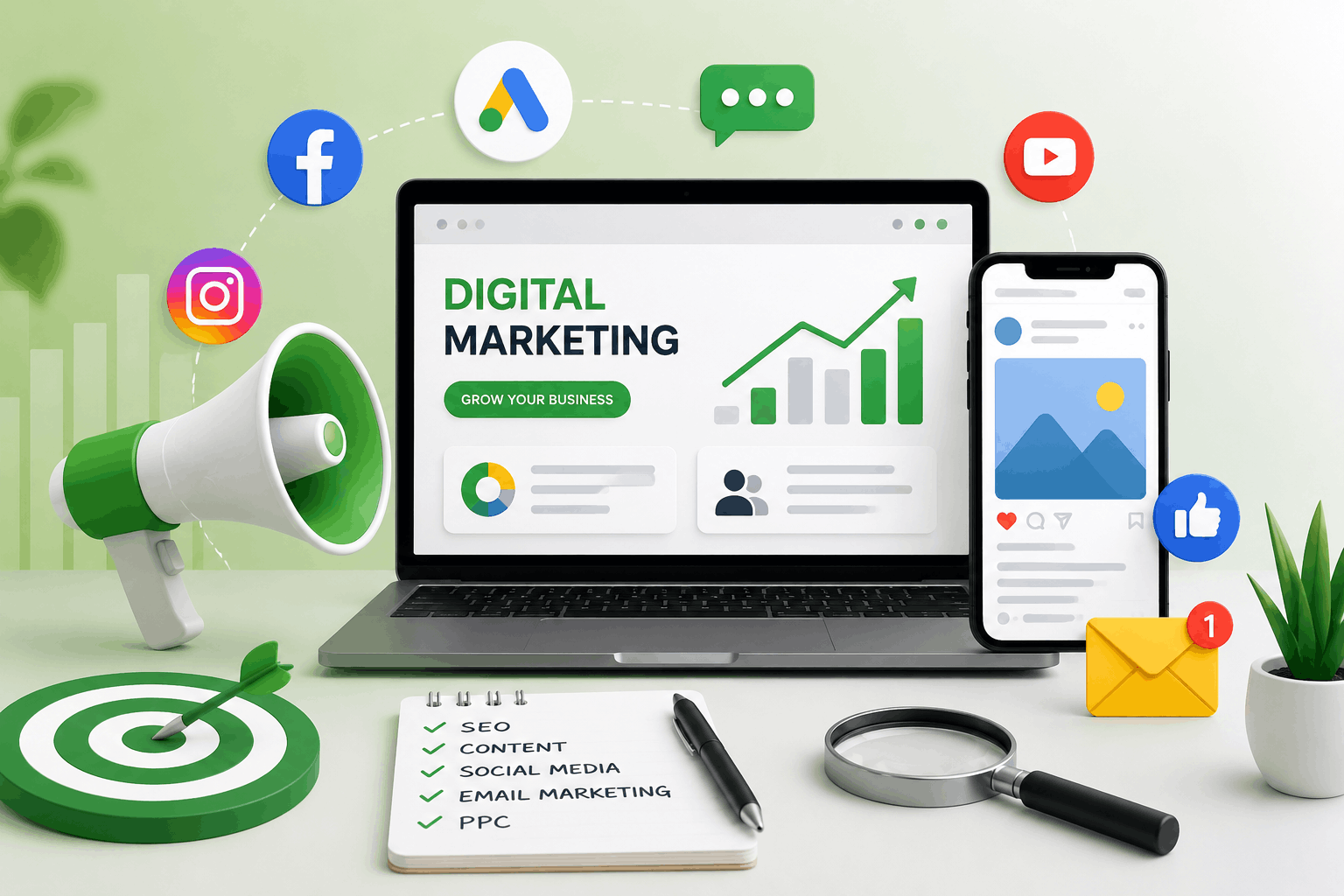
Digital marketing is really an umbrella term covering several specialized roles — SEO, content marketing, social media management, paid ads, email marketing, and analytics. You get to choose a niche that matches your interests and strengths, rather than being boxed into one fixed job description.
4. Freelancing and Remote Work Are the Norm
Few fields are as naturally suited to remote work. Many digital marketers freelance, work with international clients, or eventually run their own small agencies — something that’s far harder to pull off in more traditional careers.
Best Digital Marketing Courses to Get Started
The right course can save you months of trial and error. Here’s where to begin.
Free and Low-Cost Options
- Google Digital Garage – A beginner-friendly, well-structured course covering the fundamentals of digital marketing.
- HubSpot Academy – Free certifications in content marketing, email marketing, and inbound marketing.
- Meta Blueprint – Focused specifically on Facebook and Instagram advertising.
Paid Certification Courses
- Google Ads and Analytics Certification – Widely recognized by employers and useful for paid-ads roles.
- SEO courses on Coursera or Udemy – Good for going deeper into search engine optimization specifically.
- Institute-based diploma programs – Many Indian ed-tech platforms now offer 3–6 month digital marketing diploma courses with live projects and placement support.
A practical approach: start with a free resource to see if you genuinely enjoy the work, then invest in a paid, structured course once you’re sure this is the direction you want to pursue.
Skills You Need to Succeed in Digital Marketing
Courses teach the theory, but success in this field comes down to a mix of practical and soft skills.
- SEO (Search Engine Optimization) – Understanding how to rank content higher on Google
- Content Writing – Creating clear, engaging copy for blogs, ads, and social posts
- Social Media Management – Knowing how each platform works and what content actually performs
- Basic Analytics – Reading data from tools like Google Analytics to understand what’s working
- Paid Advertising – Running and optimizing campaigns on Google and Meta
- Communication Skills – Explaining strategy clearly to clients, managers, or teams
- Adaptability – Trends and algorithms change constantly, so staying curious matters as much as any single technical skill
You don’t need to master everything at once. Most working digital marketers start broad, then specialize in one or two areas as they gain experience.
Digital Marketing Career Options After Graduation
Once the basics are in place, here are the job roles typically open to you.
SEO Specialist Improves a website’s visibility on search engines through keyword research, content optimization, and technical fixes.
Social Media Manager Handles a brand’s presence across platforms — planning content, engaging followers, and tracking growth.
Content Marketer Creates blogs, videos, and other content designed to attract and retain an audience.
PPC (Pay-Per-Click) Specialist Manages paid ad campaigns on Google, Facebook, and Instagram, aiming for the best results at the lowest ad spend.
Email Marketing Specialist Builds email campaigns that nurture leads and convert them into paying customers.
Digital Marketing Analyst Studies campaign data and performance metrics to help businesses make sharper marketing decisions.
Digital Marketing Manager An experienced role overseeing the entire marketing strategy — usually after a few years in the field.
Each of these roles works as a full-time job, a freelance gig, or a stepping stone toward starting your own agency later.
Digital Marketing Salary in India (2026)
One of the first questions students ask: what’s the actual pay like? Here’s a general range — actual numbers vary by city, company, and specialization.
| Experience Level | Approximate Monthly Salary |
|---|---|
| Fresher / Intern | ₹10,000 – ₹20,000 |
| 1–2 Years Experience | ₹20,000 – ₹40,000 |
| 3–5 Years Experience | ₹40,000 – ₹80,000 |
| Senior / Managerial Roles | ₹80,000 and above |
Freelancers and those working with international clients often earn considerably more, especially once they’ve built a strong portfolio and a steady client base. If you’re weighing this against a stable government role, our comparison of career paths after graduation may help you decide what fits your priorities better.
How to Build a Digital Marketing Career: Step-by-Step
If you’re starting from zero, here’s a simple roadmap.
Step 1: Learn the Basics Start with a free course to understand core concepts — SEO, social media, content, and paid ads.
Step 2: Pick a Specialization Once you understand the landscape, choose one or two areas that genuinely interest you. Trying to be good at everything at once usually leads to burnout rather than expertise.
Step 3: Get Hands-On Practice Start a blog, manage a small business’s Instagram page, or run a mock ad campaign. Real practice teaches more than theory alone.
Step 4: Build a Portfolio Document your work — case studies, result screenshots, and sample content — so you have proof of skill when applying for jobs or clients.
Step 5: Apply for Internships Internships, even the unpaid or low-paid ones early on, help you understand how agencies and in-house teams actually operate.
Step 6: Keep Learning Digital marketing shifts constantly. Following industry blogs, YouTube channels, and platform updates from Google and Meta keeps your skills current.
Common Mistakes Beginners Make
- Trying to learn everything at once instead of focusing on one skill first
- Skipping practical work and relying only on theory or certificates
- Ignoring analytics — data should guide every marketing decision
- Inconsistency — one blog post or one week of social posting won’t show measurable results
- Underpricing freelance work out of fear of not landing clients
Avoiding these early mistakes can save a lot of frustration later on.
Frequently Asked Questions
Is digital marketing a good career option for students in 2026?
Yes. As businesses continue shifting online, demand for skilled digital marketers keeps growing across industries, making it a strong choice for students and graduates alike.
Do I need a degree to become a digital marketer?
No specific degree is required. Practical knowledge, certifications, and a solid portfolio of work matter far more than your academic background.
How long does it take to learn digital marketing?
Basic concepts can be learned in 2–3 months. Becoming genuinely skilled and job-ready usually takes 6 months to a year of consistent learning and hands-on practice.
Can I do digital marketing as a side hustle while studying?
Yes. Many students manage social media accounts or write content for small businesses part-time while completing their studies.
Which is better — a paid course or free resources?
Both have a place. Free resources are great for exploring the field initially, while paid courses offer structured learning, mentorship, and often stronger recognition from employers.
Conclusion
Digital marketing isn’t a passing trend — it has become a core part of how nearly every business operates. For students and young professionals, it offers something genuinely rare: a low entry barrier, several career paths to choose from, and real room for growth, whether you want a stable job, a freelance career, or your own agency down the line.
The best part is that you can start today. Pick one free course, learn the fundamentals, and take that first small step. A few months from now, you may find yourself building a career you actually enjoy — one campaign, one blog post, one client at a time.