
Most Indian students land in Germany expecting tuition to be their biggest expense. It isn’t. At public universities, it’s zero.
That single fact has quietly made study in Germany for Indian students one of the most attractive study-abroad options today — not because it’s flashy or trendy, but because the math genuinely works out better than the US, UK, or Australia for most middle-class families.
This guide walks you through exactly what studying in Germany for Indian students actually costs, how the visa process works, which universities are worth targeting, and the practical details that usually catch students off guard.
Quick Facts: Study in Germany 2026
-
- Tuition: Free at public universities (undergraduate + most master’s)
- Semester contribution: €150-€400/semester
- Living cost: €11,000-€15,000/year
- Blocked account requirement: €11,904 (released monthly at €992)
- Visa fee: €75
- Visa processing time: 6-12 weeks
- Post-study work visa: 18 months
- IELTS: Required for most English-taught programs (6.5+), not always mandatory
Why Germany Has Become a Top Choice for Indian Students
Before getting into the specifics, it’s worth understanding what’s actually driving this shift.
- Zero or near-zero tuition at public universities, even for international students, at both undergraduate and most master’s levels
- 400+ universities across the country, many offering globally recognised, English-taught programs, especially in engineering, computer science, and business
- An 18-month post-study work visa, giving graduates genuine time to find employment and transition to long-term residency
- A cost structure 40-60% lower than equivalent programs in English-speaking countries like the US or UK, since tuition itself isn’t the expense driver
None of this means Germany is “free” or effortless — living costs, visa requirements, and language considerations all matter. But the overall value proposition is genuinely strong, especially for STEM and business students.

How Much Does It Actually Cost to Study in Germany?
Here’s where the “Germany is free” myth needs some nuance.
Tuition Fees
- Public universities: Zero tuition fees for most undergraduate and master’s programs, for both German and international students
- Semester contribution: A mandatory fee of roughly €150-€400 per semester, covering administrative costs and often including a public transport pass
- Exception — Baden-Württemberg: This state charges non-EU students an additional €1,500 per semester, so double-check this if you’re targeting universities in that region
- Private universities: These do charge tuition, often significantly, so factor this in if you’re considering a private institution over a public one
Living Costs
Living expenses, not tuition, are what actually determine your budget in Germany:
- Student dormitories: Around €267/month — the most affordable and commonly chosen option
- Shared apartments (WGs): €300-€650/month
- Private apartments: Averaging €828/month, going up to €1,500 in city centres
- Food: Budget-friendly meals can cost as little as €3-€4, with many student cafeterias (Mensa) offering subsidised options
Total Estimated Annual Cost
Most Indian students spend roughly €11,000 to €15,000 per year (approximately ₹12-16.35 lakh) at a public university — almost entirely made up of living expenses, health insurance, and the semester fee, rather than tuition itself.

The Blocked Account: A Key Financial Requirement
As part of the visa process, Germany requires international students to prove they can financially support themselves.
- As of 2026, you need to deposit €11,904 in a blocked account (Sperrkonto) before applying for your student visa
- This amount is released monthly at €992, which represents the assumed minimum monthly living cost for a student
- The blocked account can be opened through providers like Fintiba or Coracle, both commonly used by Indian applicants
- Two legitimate alternatives exist: a scholarship covering at least €992/month (such as DAAD or Erasmus+), or a formal obligation letter (Verpflichtungserklärung) filed by a German resident on your behalf
If older sources you’ve seen mention €11,208, that’s the outdated pre-2025 figure — always double-check you’re working with the current requirement before finalising your budget.

German Student Visa Process for Indian Students
The visa process has genuinely changed in recent years, so it’s worth understanding the current system rather than relying on older guides. The German Federal Foreign Office publishes the authoritative, up-to-date requirements, which is worth bookmarking directly.
Step-by-Step Visa Process
- Secure admission from a German university or Studienkolleg (foundation program), since this is required before applying for the visa
- Get your APS certificate — this is a mandatory academic verification step for Indian students, confirming your educational documents are authentic. It’s issued by APS India, a joint institution of the German Embassy and DAAD, and typically takes 4-8 weeks, so start this early
- Open your blocked account and deposit the required €11,904
- Arrange health insurance, since this is mandatory for the visa application and university enrolment
- Apply through the Consular Services Portal (digital.diplo.de) — since January 2025, Germany moved to this new online system, replacing the older VFS-based waitlist process
- Book your appointment and submit biometrics at your nearest visa application centre — VFS Global manages these centres in New Delhi, Mumbai, Bengaluru, Chennai, Kolkata, and several other cities
- Wait for processing, which generally takes 6-12 weeks
Visa Fees and Timing
- The standard visa fee is €75 for adults (roughly ₹7,725)
- Apply at least 3-4 months before your course start date, especially for the winter intake, since consulate appointment slots fill up quickly
- Realistic total cost of the entire visa process — including APS, blocked account setup, insurance, and service charges — typically lands between ₹14-16 lakh, before factoring in flights and the semester contribution

Do You Need IELTS or German Language Proficiency?
This depends entirely on which type of program you’re applying to.
- English-taught programs (common in Engineering, Computer Science, Data Science, and Business at universities like TU Munich, RWTH Aachen, and KIT): IELTS 6.5+ or TOEFL 90+ is typically required, though some universities waive this if your prior education was in English with a medium-of-instruction certificate
- German-taught programs (common in Medicine, Law, and some engineering specialisations): You’ll need B2 or C1 level German proficiency, verified through TestDaF or DSH certification
If your admission letter already confirms sufficient English proficiency, some visa applications don’t require separate language test scores — but check your specific university’s requirements directly rather than assuming.
Top Universities in Germany for Indian Students
Germany doesn’t have a single dominant “top” university the way some countries do — instead, it has a wide, consistently strong public university system. A few names that consistently attract Indian students:
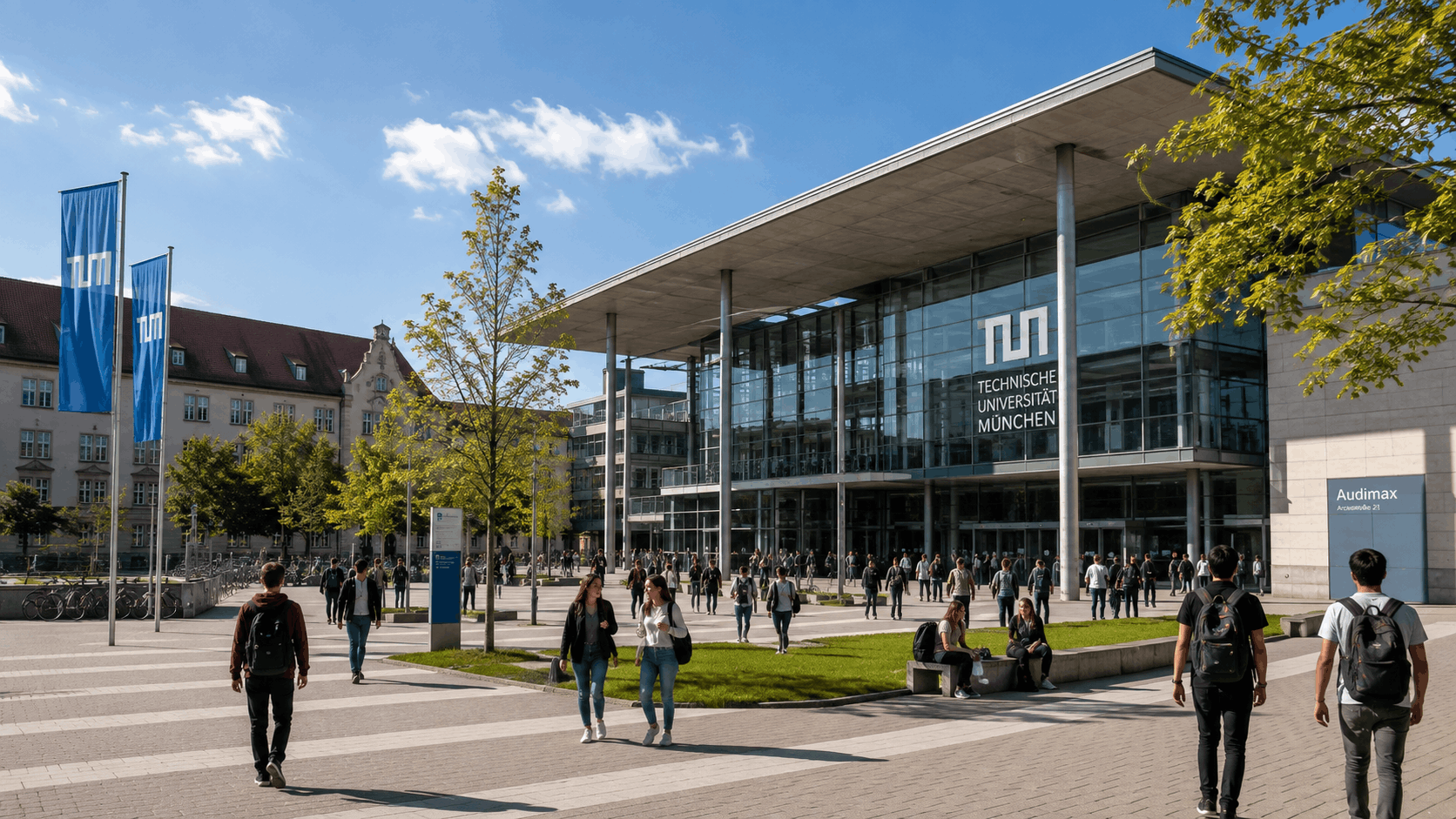
- Technical University of Munich (TUM) — particularly strong for engineering and computer science
- RWTH Aachen University — one of Europe’s leading technical universities, popular for engineering programs
- Karlsruhe Institute of Technology (KIT) — known for research-focused engineering and technology programs
- Ludwig Maximilian University of Munich (LMU) — strong across sciences, humanities, and business
- Technical University of Berlin — well-regarded for engineering and technology, with the added benefit of Berlin’s cosmopolitan environment
Since public universities across Germany maintain broadly similar tuition structures (largely free), the real differentiator between them is program specialisation and city cost of living, not fee differences.
How Germany Compares to Other Study Abroad Destinations
If you’re weighing Germany against other options, here’s a side-by-side view:
| Country | Tuition (Public) | Avg. Annual Living Cost | Post-Study Work Visa |
|---|---|---|---|
| Germany | Free (except Baden-Württemberg) | €11,000-€15,000 | 18 months |
| USA | High ($20,000-$50,000+) | $15,000-$25,000 | Up to 3 years (OPT/STEM extension) |
| UK | Moderate-High (£10,000-£38,000) | £12,000-£15,000 | 2 years (Graduate Route) |
| Australia | Moderate-High (AUD 20,000-45,000) | AUD 18,000-24,000 | 2-4 years, varies by degree level |
A few things worth noting beyond the table:
- Germany vs USA: Germany’s near-zero tuition makes it dramatically more affordable, though the US often has stronger brand recognition for certain programs and a larger domestic job market post-graduation
- Germany vs UK: The UK’s shorter program durations (often one-year master’s) can mean lower total costs despite higher tuition, so compare total cost, not just tuition rate, between the two
- Germany vs Australia: Both offer strong post-study work visas, but Germany’s tuition advantage generally makes it more budget-friendly overall
If you’re still exploring other destinations alongside Germany, our Study Abroad Australia and USA F1 Visa Interview Questions guides cover what those specific processes look like, so you can compare properly before deciding.
Scholarships for Studying in Germany
Since tuition is already low, most scholarships in Germany focus on covering living costs rather than fees.
- DAAD Scholarships — Germany’s primary scholarship program for international students, run by the German Academic Exchange Service (DAAD India), funding a wide range of master’s and doctoral studies, particularly attractive given Germany’s already-low base costs
- Erasmus+ — relevant if you’re pursuing part of your program through exchange arrangements with European partner institutions
If you’re comparing scholarship options across multiple countries, our Top Scholarships for Indian Students guide covers DAAD alongside other major country-specific and government scholarship programs in more depth.
Common Mistakes Indian Students Make When Planning to Study in Germany
Mistake 1: Assuming “Free Tuition” Means “Free Education”
Living costs, insurance, and the blocked account requirement mean you still need a realistic budget of ₹12-16 lakh or more for the full experience, even without tuition fees.
Mistake 2: Starting the APS Certificate Process Too Late
Since this can take 4-8 weeks and is mandatory for most Indian applicants, leaving it until close to your visa appointment often causes unnecessary delays.
Mistake 3: Underestimating Visa Processing Time
With processing taking 6-12 weeks, applying just a month or two before your intended start date is a common, avoidable mistake that can derail an entire academic year’s plan.
Mistake 4: Not Confirming Language Requirements Early
Assuming an English-taught program means no language proof is needed, without actually checking your specific university’s requirements, can lead to last-minute scrambling for IELTS or TOEFL scores.
Frequently Asked Questions About Studying in Germany for Indian Students
1. Is it really free to study in Germany?
Tuition itself is free or near-free at public universities for most undergraduate and master’s programs. However, you’ll still pay a semester contribution fee and cover all living expenses, which typically total €11,000-€15,000 per year.
2. How much money do I need to show for a German student visa?
As of 2026, you need to deposit €11,904 in a blocked account, released monthly at €992 to cover assumed living expenses, unless you have a qualifying scholarship or a formal sponsor obligation letter instead.
3. Is IELTS mandatory to study in Germany?
Not always. If you’re applying to an English-taught program, most universities require IELTS 6.5+ or TOEFL 90+, though some waive this if your previous education was conducted in English with proper documentation.
4. How long does the German student visa process take?
Visa processing typically takes 6-12 weeks after your consulate appointment, so it’s recommended to apply at least 3-4 months before your course start date.
5. What is an APS certificate, and why do I need one?
The APS certificate is a mandatory academic document verification process for Indian students applying to German universities, confirming the authenticity of your educational records. It typically takes 4-8 weeks to process.
6. Which universities in Germany are best for Indian students?
Universities like TU Munich, RWTH Aachen, KIT, LMU Munich, and TU Berlin are popular choices, particularly for engineering, computer science, and business programs taught in English.
7. Does Germany offer a post-study work visa?
Yes, Germany offers an 18-month post-study work visa, giving graduates time to search for employment and eventually transition to longer-term residency options.
Final Thoughts on Studying in Germany for Indian Students
Germany offers a genuinely different value proposition compared to traditional study-abroad destinations — near-zero tuition, strong technical and business programs, and a clear post-study work pathway, all at a total cost significantly lower than the US or UK.
That said, the process requires real planning — the APS certificate, blocked account setup, and visa timeline all need to start months in advance, not weeks. Get these logistics right, and Germany can offer some of the best long-term value in international education today.
A Realistic Timeline for Planning Your Germany Application
Given how many moving parts are involved, here’s a rough sequence worth following if Germany is on your radar:
- 8-12 months before intake: Shortlist universities and programs, and begin researching language requirements for your specific course
- 6-9 months before intake: Take IELTS/TOEFL if required, and start gathering academic documents for the APS certificate process
- 4-6 months before intake: Apply to universities and begin the APS certificate process if you haven’t already
- 3-4 months before intake: Once you have an admission offer, open your blocked account and book your visa appointment through the Consular Services Portal
- 2-3 months before intake: Attend your visa appointment, submit biometrics, and wait for processing.
- LINK:https://www.ue-germany.com/blog/study-in-germany-for-indian-students-complete-guide